Oregon delivers the Pacific Northwest's legendary moisture with a twist — cross the Cascades and suddenly you're in high desert that bakes past 110 degrees. Portland gets 154 days of measurable rain while Bend gets 300 days of sunshine. The coast takes direct Pacific storms with sustained winds above 100 mph. And the Cascadia Subduction Zone threatens the entire western half of the state with a magnitude 9.0 earthquake that would be the most powerful in U.S. history. Your front door has to handle all of Oregon — not just the rain.
Steel and iron doors aren't just a style choice for Oregon homes — they're the engineering answer to a state where wood rots in the persistent marine moisture, warps through the temperature extremes east of the mountains, and faces both wildfire risk and seismic threat. Add Oregon's aggressive energy codes, the growing Central Oregon luxury market where Bend properties exceed $2 million, and Portland's design-forward culture that demands architectural quality, and steel is the material that satisfies both the environment and the aesthetic.
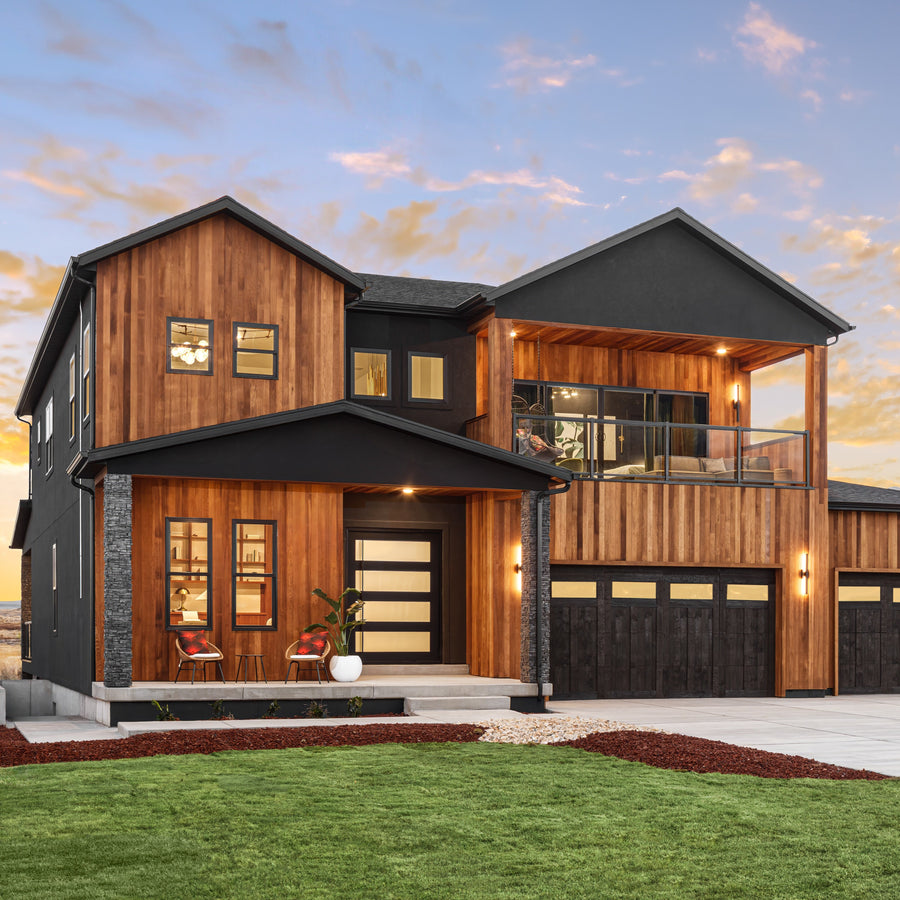
What Oregon's Climate Demands From Your Doors
The Willamette Valley: Persistent Moisture
Portland receives 43 inches of rain per year distributed across 154 days — creating the same sustained moisture exposure that defines the Pacific Northwest. Humidity averages 75 to 85 percent through fall, winter, and spring. This persistent dampness penetrates wood continuously, causing swelling, mold colonization, and progressive rot. The brief dry summer creates a secondary stress — dried wood then reabsorbs moisture in fall, cycling expansion and contraction annually. Steel doors with powder-coated finishes never absorb moisture, never swell, and never create conditions for mold.
Central Oregon: High Desert Sun and Mountain Cold
Bend sits at 3,600 feet with 300 days of sunshine, summer temperatures above 95, and winter lows well below zero. The daily temperature swing of 40-plus degrees through summer stresses every seal and joint. UV at elevation accelerates finish degradation. Then winter brings significant snow — Mt. Bachelor averages over 460 inches — and the temperature differential between heated interiors and subzero exteriors creates condensation problems on poorly insulated doors. Steel with thermal breaks handles both the desert heat and mountain cold.
The Coast: Direct Pacific Exposure
Oregon's coast takes the full force of Pacific storms — sustained winds exceeding 100 mph during winter events, horizontal rain that tests every seal, and salt air that corrodes unprotected metal within months. The 2007 Great Coastal Gale packed sustained winds of 90 to 130 mph. Between storms, the persistent moisture and salt create conditions where wood doors fail within a few seasons. Steel with marine-grade coatings handles the coast's relentless punishment.
The Cascadia Subduction Zone
Oregon's entire western region sits above the Cascadia Subduction Zone, with a 10 to 15 percent probability of a magnitude 9.0 earthquake in the next 50 years. Welded steel frames maintain structural integrity during seismic shaking and integrate into the building's continuous load path — providing the egress safety that wood frames cannot guarantee when they rack out of square during a major event.
Oregon Building Codes: Why Steel Has the Advantage
Oregon Energy Code
Oregon's Residential Specialty Code requires glazed doors to achieve U-factors of 0.30 or lower statewide — among the strictest in the nation. Portland's local amendments push further. Steel doors with thermal breaks and low-E glazing meet these requirements while maximizing the natural light Oregon homes depend on during dark Pacific Northwest winters.
Wildfire Codes
After devastating wildfire seasons — the 2020 fires burned over 1 million acres in Oregon — communities from Ashland to Bend to the Portland exurbs have adopted or strengthened WUI building codes. Steel is inherently noncombustible and exceeds fire rating requirements.
Seismic Requirements
Oregon's seismic design requirements for western Oregon are Seismic Design Category D — the same as coastal California. Welded steel frames provide the lateral resistance wood frames cannot guarantee.
Tap any door to explore sizes, configurations, and pricing
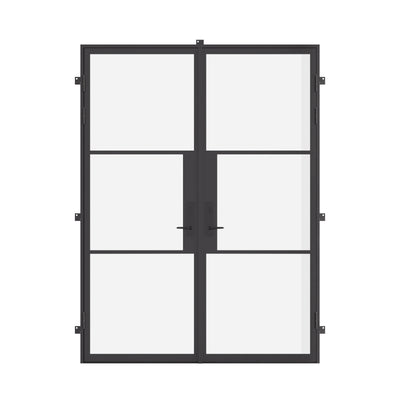
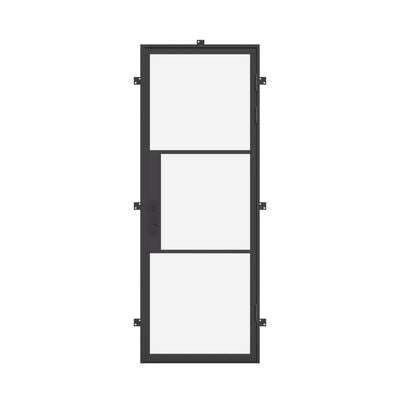
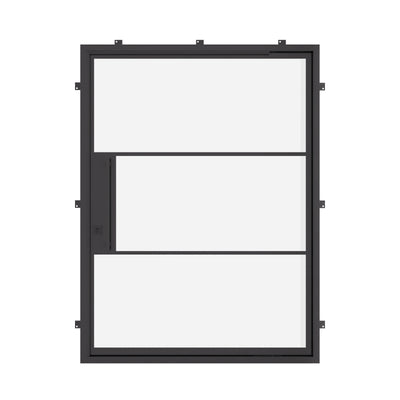
Steel Door Styles Oregon Homeowners Love
Air 4 and Air 5 Single and Double Doors — The Air 4 Double Flat defines Portland's design-forward market — the contemporary homes of the West Hills, Lake Oswego, and the Pearl District. The Air 4 Single Flat fits Craftsman renovations across Portland's Laurelhurst, Alameda, and Irvington neighborhoods. Maximum glass captures the natural light that's essential during Oregon's 150-plus overcast days.
Pivot Doors — The Air 4 Pivot and Knox Pivot serve the luxury market — Lake Oswego's lakefront, the West Hills overlooking downtown, and Bend's resort communities. Steel pivots resist the moisture-driven swelling that jams wood pivots.
Iron Doors — The Air 4 Single Full Arch and Air 4 Double Full Arch complement Portland's Craftsman heritage and the Mediterranean-inspired homes of the historic Dunthorpe neighborhood.
French Doors — Steel French doors connect Oregon homes to covered patios, garden rooms, and the outdoor spaces that define Pacific Northwest living when the sun appears.
Bi-Fold and Sliding Doors — The Air 4 Bi-Fold creates the indoor-outdoor transitions Oregon homes are designed around — capturing mountain views in Bend, garden access in Portland, and ocean air on the coast.
Oregon's Architectural Landscape: City by City
Portland: Craftsman Capital and Design Hub
Portland's neighborhoods preserve thousands of Craftsman bungalows — Laurelhurst, Alameda, Irvington, and Eastmoreland showcase the style at its best. The Pearl District and South Waterfront represent the city's contemporary ambitions. Lake Oswego and Dunthorpe offer $1 to $5 million luxury. The West Hills' mid-century and contemporary homes overlook the city with Cascade views. Portland's design culture demands both quality and authenticity — steel and iron doors deliver both.
Bend: Mountain Resort Modern
Bend's transformation from timber town to resort destination has driven luxury development from $500,000 to $5 million. Broken Top, Tetherow, and Pronghorn feature mountain contemporary and lodge architecture designed around Cascade views. The Old Mill District's urban infill adds contemporary downtown living. Steel doors with thermal breaks handle Bend's 300 days of UV and its mountain winters equally.
The Coast: Cannon Beach to Bandon
Cannon Beach's weathered-shingle cottages and contemporary glass homes, Manzanita's understated luxury, and Bandon's oceanfront properties all demand doors engineered for direct Pacific exposure. Marine-grade steel resists the salt air and storm-force winds that define Oregon's coast.
Ashland and Southern Oregon
Ashland — home of the Oregon Shakespeare Festival — attracts a sophisticated market where Craftsman, Victorian, and contemporary homes sell for $500,000 to $2 million. The Rogue Valley's growing wine country adds rural luxury. Post-2020 fire codes make noncombustible materials increasingly required.
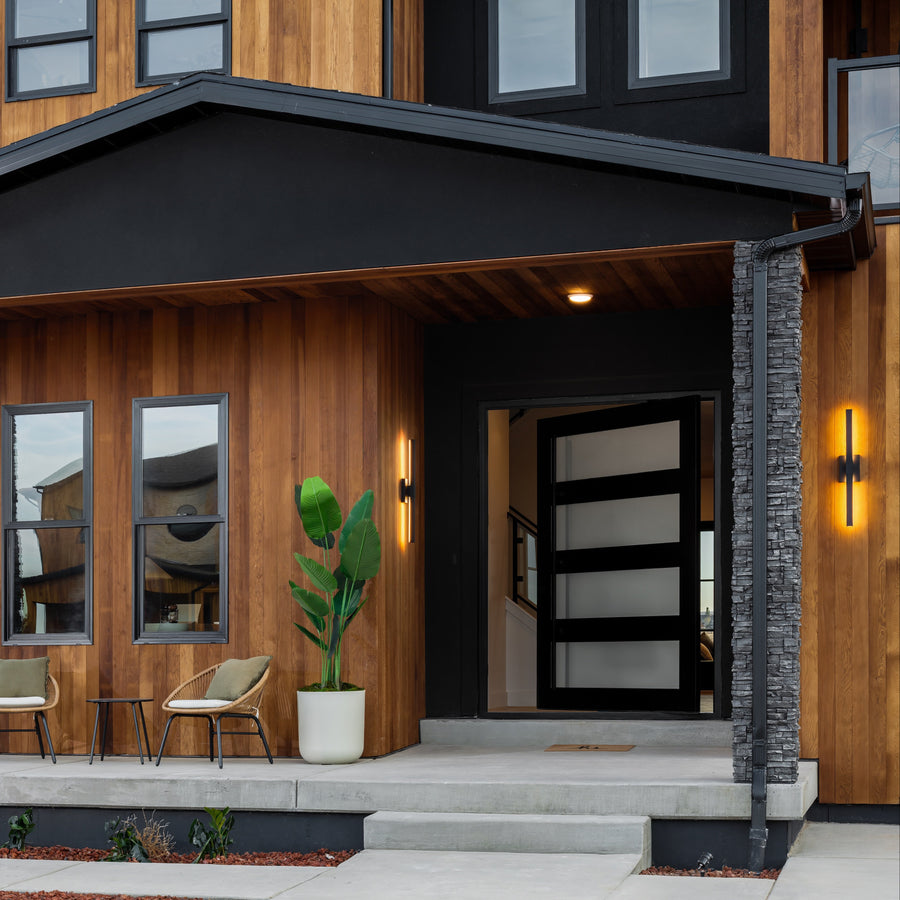
Choosing the Right Color for Oregon Homes
Craftsman: Dark bronze, oil-rubbed finishes, and forest green complement the cedar, brick, and natural materials of Oregon's Craftsman tradition.
Pacific Northwest Contemporary: Matte black creates bold contrast against natural wood cladding, concrete, and weathering steel — the signature combination in Portland and Bend.
Coastal: Weathered tones and soft grays complement shingled coastal homes. Marine-grade coatings resist Pacific salt air.
Mountain Lodge: Dark bronze and earth tones complement the timber and stone of Central Oregon mountain architecture.
PINKYS uses an automotive-grade paint system that resists Oregon's persistent moisture, UV at altitude, and coastal salt air.
Why Oregon Homeowners Choose Steel
In a state where Portland's median exceeds $500,000 and Bend's luxury market surpasses $2 million — a steel door investment delivers outsized returns. Steel eliminates the moisture-driven rot, mold, and maintenance cycle that Oregon's climate inflicts on wood. Permanent performance from the coast to the mountains.
Transform Your Oregon Home
Whether you're renovating Craftsman in Portland, building mountain modern in Bend, weatherproofing on the coast, or fire-proofing in southern Oregon, PINKYS has steel and iron doors engineered for Oregon.
We ship nationwide with fast delivery — our doors handle Pacific storms, mountain snow, and seismic events.
Contact Our Team or call 844-843-6677