Texas doesn't just have weather — it has warfare between climates. The Gulf Coast takes direct hits from Category 4 hurricanes. North Texas spawns tornadoes that rip through suburbs with $2 billion in single-event damage. West Texas bakes past 110 degrees for weeks while blowing sand strips paint off anything exposed. The Hill Country floods without warning — July 2025 flash floods killed over 135 people. Your front door has to survive all of it.
Steel and iron doors aren't just a design upgrade for Texas homes — they're an engineering solution for a state where wood warps in the Gulf humidity, fiberglass shatters under hail impacts, and termites cause more property damage annually than tornadoes. Add hurricane-zone impact ratings, the state's adoption of IECC energy codes, and a luxury market where 14,418 homes sold for over $1 million last year, and steel stops being a luxury choice and starts being the smart one.
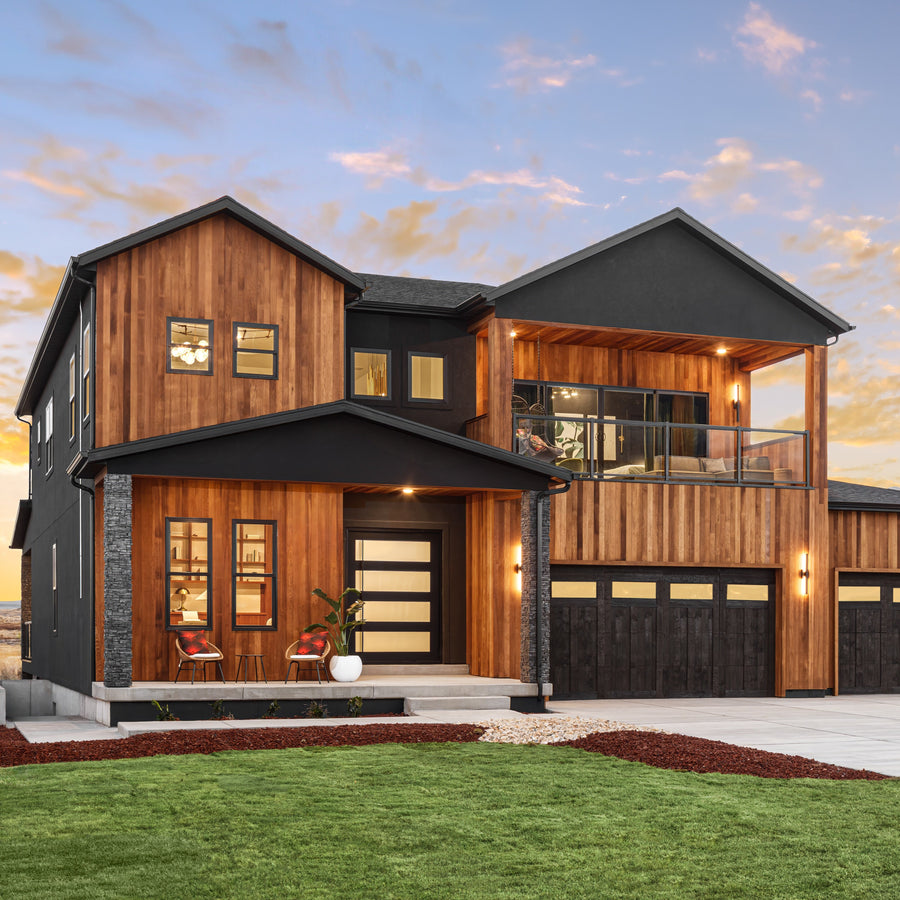
What Texas Climate Demands From Your Doors
The Gulf Coast: Hurricanes, Humidity, and Salt Air
Hurricane Beryl made landfall in Matagorda in July 2024 with sustained winds of 80 mph. Harvey dumped 60 inches of rain on Houston in 2017 — the most rainfall from a single storm in U.S. history. From Galveston to Corpus Christi, the Texas coast delivers sustained humidity above 80 percent for months, salt air that corrodes unprotected metal within miles of shore, and wind-driven rain that finds every gap in a door assembly. Between storms, the subtropical heat and moisture create ideal conditions for mold, rot, and termite infestation in wood doors. Steel doors with powder-coated finishes and marine-grade weatherstripping resist this environment where wood swells, sticks, and eventually fails.
North Texas: Tornado Alley and Severe Hail
The Dallas-Fort Worth metroplex sits in one of the most hail-active regions on Earth. A single May 2024 hailstorm caused over $2 billion in insured losses across North Texas. Baseball-sized hail events hit the region multiple times per decade. Add straight-line winds exceeding 70 mph during spring supercells, temperature swings from 20-degree winter mornings to 105-degree summer afternoons, and the constant expansion-contraction cycling that warps wood frames and cracks fiberglass within a few seasons. Steel doors with insulated cores and welded frames maintain structural integrity through impacts and thermal cycling that destroy lesser materials.
West Texas and the Panhandle: Extreme Heat and Wind-Driven Sand
Midland-Odessa regularly exceeds 110 degrees in summer. The Panhandle sees dust storms that reduce visibility to zero and blast every exposed surface with abrasive particles. Lubbock averages wind speeds above 12 mph year-round — among the highest in the nation. Winter brings Arctic fronts that drop temperatures 50 degrees in 24 hours, creating thermal shock that splits wood and cracks rigid seals. In this environment, automotive-grade coatings and polyurethane foam weatherstripping aren't optional features — they're survival requirements. Steel handles the punishment without dimensional change.
Central Texas and the Hill Country: Flash Flooding and Temperature Extremes
Austin hit 112 degrees in June 2023. The Hill Country sits atop shallow limestone karst — rain runs off instead of absorbing, sending walls of water down creek beds without warning. The region also experiences daily temperature swings of 30 to 40 degrees in summer. This cycling warps wood doors within seasons. Then from October through April, blue northers push freezing air into areas that were 80 degrees hours earlier, stressing every seal and joint in a door assembly. Steel doors with thermal break technology handle these extremes while maintaining the energy efficiency that rising Texas utility costs demand.
South Texas: Subtropical Heat and Persistent Humidity
The Rio Grande Valley rarely drops below 50 degrees, but routinely exceeds 100 for months. McAllen and Brownsville combine sustained heat with Gulf moisture, creating conditions where wood doors swell permanently and mold colonizes any organic material within months. Termite pressure in South Texas is among the highest in the nation — the Formosan subterranean termite, the most destructive species in North America, is well-established throughout the region. Steel eliminates termite risk entirely and resists the humidity-driven degradation that plagues wood and composite doors.
Texas Building Codes: Why Steel Has the Advantage
IECC Energy Standards
Texas adopted the 2015 International Energy Conservation Code statewide, with many municipalities pushing toward 2021 standards. Doors must meet U-factor requirements that vary by climate zone — Texas spans zones 2 through 4, from the subtropical Valley to the Panhandle. Glazed doors in zone 2 need U-factors of 0.40 or lower, tightening to 0.32 in zone 4. Standard aluminum doors conduct too much heat to comply. Steel doors with thermal breaks and low-E glazing packages meet these requirements across all Texas climate zones, reducing cooling costs in a state where summer electricity bills routinely exceed $300 per month.
Windstorm and Hurricane Codes (TWIA)
The Texas Windstorm Insurance Association covers 14 coastal counties and requires exterior openings — including entry doors — to meet impact-resistance standards per ASTM E1886 and E1996. Doors must withstand large missile impact testing (a 9-pound 2x4 launched at 34 mph) and cyclic pressure testing simulating sustained hurricane winds. These requirements extend well beyond the immediate coast — any structure seeking TWIA coverage must comply. Steel doors meet these impact ratings where wood and fiberglass cannot, and compliance is required for windstorm insurance that coastal Texas homeowners can't go without.
Austin WUI Wildfire Codes
After devastating wildfires in Bastrop County in 2011 and across Central Texas in subsequent years, Austin and surrounding communities adopted Wildland-Urban Interface codes requiring noncombustible or ignition-resistant exterior materials in designated zones. Entry doors must resist ember intrusion and direct flame contact. As development pushes further into the Hill Country cedar forests, these zones expand annually. Steel is inherently noncombustible and achieves fire ratings that exceed WUI requirements — the same advantage California steel doors provide in their fire zones.
Tap any door to explore sizes, configurations, and pricing
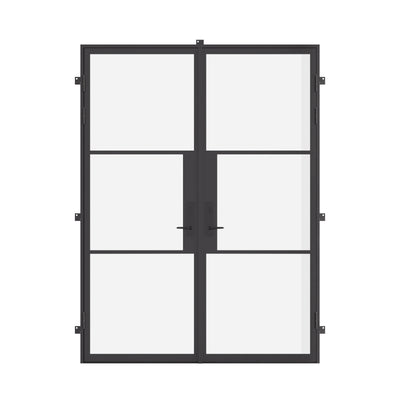
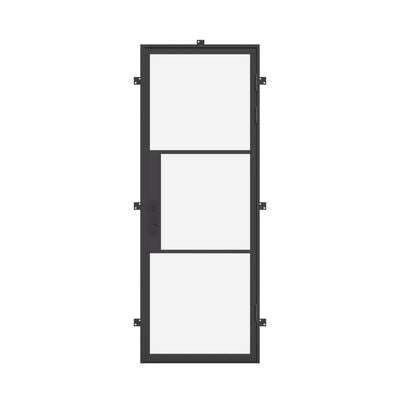
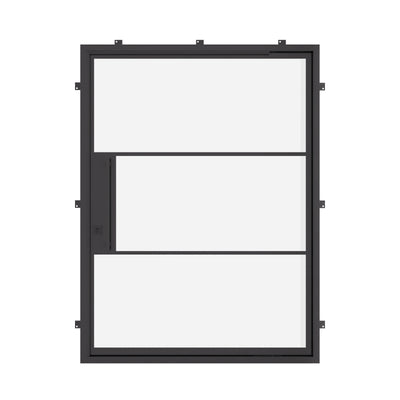
Steel Door Styles Texas Homeowners Love
Air 4 and Air 5 Single and Double Doors — Full glass panels with slim steel frames deliver the clean-lined, light-filled aesthetic that defines contemporary Texas architecture. The Air 4 Double Flat anchors the grand double-height entries of new builds in Preston Hollow and Westlake Hills, while the Air 4 Single Flat fits the modern farmhouses spreading across the Hill Country and the updated ranch homes of Fort Worth's Arlington Heights. The Air 5 Single Flat offers wider glass panels for maximum light in north-facing entries. The minimal steel profile maximizes natural light while the welded frame handles thermal cycling and hail impacts that would destroy an aluminum or wood equivalent.
Pivot Doors — The statement entry for Texas's booming luxury market. The Air 4 Pivot and Knox Pivot rotate on floor-mounted pivots to create the dramatic first impressions that Highland Park, River Oaks, and Horseshoe Bay properties demand. With 14,418 Texas homes selling above $1 million annually, the luxury market expects pivot entries that make a statement from the street. Steel pivot doors span openings that would be structurally impossible with wood, and the pivot mechanism distributes the weight of a large steel panel without stressing the frame — critical in a state where foundation movement is a fact of life.
Iron Doors — Wrought iron is architecturally native to Texas's Spanish Colonial and Mediterranean homes. The Air 4 Single Full Arch and Air 4 Double Full Arch honor the arched doorways of San Antonio's King William Historic District, the Spanish haciendas of the Rio Grande Valley, and the Mediterranean estates of Houston's Tanglewood neighborhood — delivering the fire resistance and impact ratings that Texas conditions demand.
French Doors — Texas invented the covered patio as a second living room, and French doors in steel deliver the expansive glass and elegant proportions the lifestyle requires. Whether you're opening onto a flagstone courtyard in a San Antonio Spanish Revival or a screened porch overlooking Lake Travis, steel French doors provide the impact resistance TWIA demands and the thermal performance IECC codes require without sacrificing the indoor-outdoor flow Texas homes are built around.
Bi-Fold and Sliding Doors — The Air 4 Bi-Fold stacks its steel panels to create wide-open transitions between great rooms and outdoor living spaces — the feature every Texas homeowner wants for the eight months of the year when the weather cooperates. Popular in Hill Country homes with limestone patios, modern builds in Austin's East Side, and luxury properties along the Gulf Coast where hurricane-rated bi-folds are a necessity. The steel frames resist the racking that plagues aluminum bi-folds during severe weather events.
Texas's Architectural Landscape: City by City
Houston: From Mediterranean Mansions to Industrial Loft
Houston's no-zoning-code policy created one of America's most architecturally diverse cities. River Oaks — where homes routinely sell for $5 to $20 million — mixes Mediterranean Revival mansions with contemporary glass-and-steel builds. Tanglewood's tree-lined streets showcase the transitional style that dominates Houston's upper market — traditional proportions with modern materials. The Heights preserves renovated Victorian bungalows alongside new urban contemporary builds, and EaDo's converted warehouses demand industrial-modern doors. Iron doors with arched tops suit the Mediterranean neighborhoods. Air 4 and pivot doors own the contemporary market. In a city where Gulf humidity is the universal enemy, steel's moisture resistance isn't a bonus feature — it's the baseline requirement.
Dallas-Fort Worth: Contemporary Power Meets Western Heritage
Preston Hollow's $3 to $30 million estates set the tone for Dallas luxury — oversized entries, dramatic scale, and materials that project permanence. Highland Park's legacy homes blend traditional architecture with meticulous renovations where iron and steel entries replace aging wood. Fort Worth's Westover Hills and Rivercrest neighborhoods maintain a more understated elegance, while the Fairmount Historic District — one of the largest in the state — preserves Victorian and Craftsman architecture that pairs naturally with iron and steel detailing. In a metro where baseball-sized hail is a recurring reality, impact-resistant steel doors aren't just beautiful — they're the practical choice builders and homeowners are increasingly specifying.
Austin: Tech-Forward Modern and Hill Country Rustic
Austin's building boom transformed the city's architectural identity. Tarrytown and Westlake Hills feature a mix of preserved mid-century ranches and new contemporary builds with walls of glass overlooking the Hill Country. East Austin's modern homes — all flat roofs, steel, and glass — represent the tech-wealth aesthetic that defines the city's newer neighborhoods. Meanwhile, Dripping Springs, Bee Cave, and Lakeway blend Hill Country limestone with modern steel and glass for a rustic-contemporary hybrid that's become Austin's signature style. The Air 4 Double Flat and pivot doors dominate Austin's luxury new construction, where the indoor-outdoor lifestyle demands entries that frame views while meeting WUI fire codes as development pushes into the cedar forests.
San Antonio: Spanish Colonial Heritage
The King William Historic District — Texas's first residential historic district — preserves Victorian mansions built by German merchants in the 1800s. Monte Vista's grand homes showcase Spanish Colonial Revival and Mediterranean architecture that defines the city's character. Alamo Heights maintains strict architectural standards that favor traditional proportions and materials. In these neighborhoods, wrought iron doors aren't just compatible with the architecture — they're historically authentic. The Air 4 Single Full Arch and Air 4 Double Full Arch honor San Antonio's heritage while delivering the fire resistance and thermal performance that modern building codes require.
Gulf Coast: Galveston to South Padre
From Galveston's Victorian Strand Historic District to the modern beach houses of South Padre Island, the Texas Gulf Coast demands doors that survive hurricanes. Galveston's East End Historic District preserves raised Victorian cottages where iron detailing is original to the architecture. Corpus Christi's Hewit Park and Ocean Drive properties combine coastal contemporary design with the TWIA-mandated impact ratings every coastal homeowner needs. Steel doors with impact-resistant glazing and marine-grade hardware meet windstorm insurance requirements while delivering the salt-air corrosion resistance that keeps the door performing season after season. On the Texas coast, your door choice isn't just aesthetic — it's your insurance compliance.
Choosing the Right Color for Texas Homes
Spanish Colonial and Mediterranean: Wrought iron black and dark bronze finishes complement the stucco, terra cotta tile, and arched motifs that define San Antonio, Houston's Tanglewood, and the Rio Grande Valley. Rich wood-tone finishes also work. The goal is to echo the existing iron railings, balconies, and window grilles that are signature to these homes.
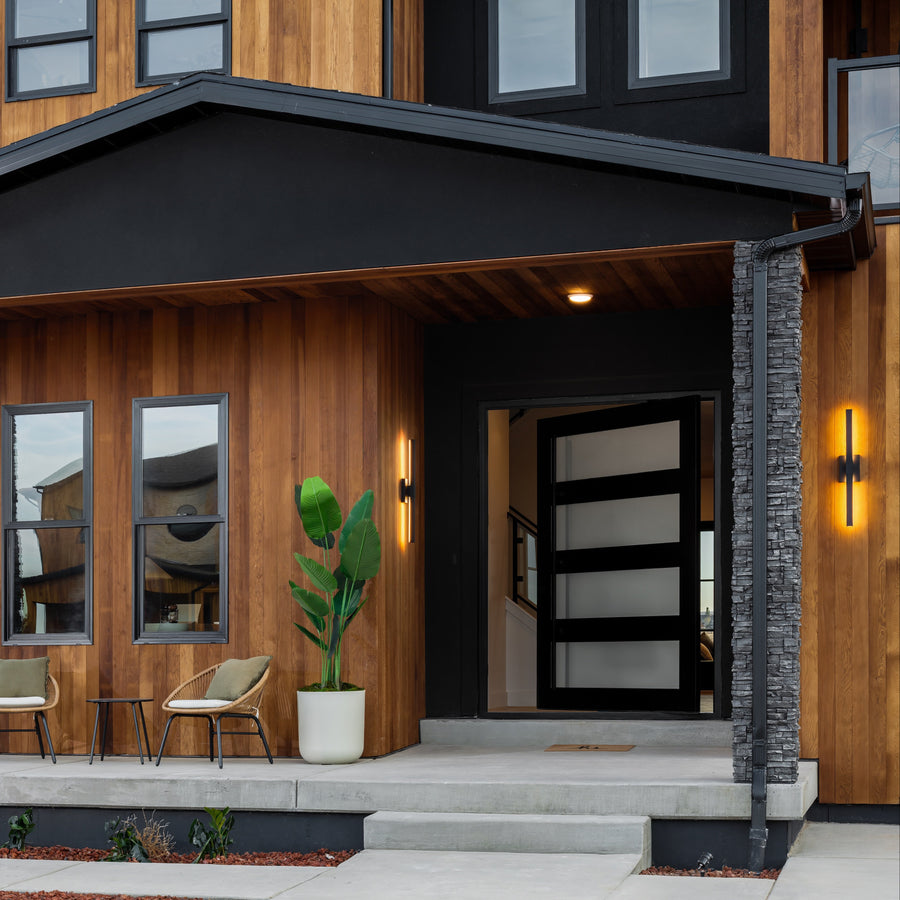
Modern and Contemporary: Matte black dominates Texas's luxury contemporary market from Preston Hollow to Westlake Hills. Gunmetal and dark charcoal create the bold contrast against lighter walls that architects are specifying across Austin, Dallas, and Houston's newer neighborhoods. A dark steel door against white Hill Country limestone or smooth stucco delivers the color-blocking effect trending in high-end Texas architecture.
Hill Country Rustic-Contemporary: Dark bronze and weathered iron finishes complement the native limestone, reclaimed wood, and metal roofing that define Hill Country architecture. Natural earth tones — cedar brown, iron oxide, warm charcoal — blend with the landscape rather than competing with the views. Steel doors in these finishes bridge the gap between rustic Texas heritage and modern design expectations.
Coastal: Lighter steel finishes, white, or weathered tones complement Gulf Coast homes without competing with water views. Soft grays and warm whites work better than stark white — Texas's intense sun makes pure white read harsh. Marine-grade powder coatings in these lighter shades resist the salt air corrosion that destroys lesser finishes within a few seasons.
Craftsman and Victorian: Dark bronze and oil-rubbed finishes honor the Arts and Crafts tradition seen in Fort Worth's Fairmount District and the Victorian homes of Galveston's East End. Earthy tones — deep brown, forest green, iron oxide — blend with the brick, stone, and detailed woodwork these historic homes were built around.
PINKYS uses an automotive-grade paint system that can match virtually any color specification. In Texas's punishing UV environment — stronger than most of the country — finish durability matters as much as the color itself. Our coatings resist the fading, chalking, and peeling that destroy lesser finishes within a few seasons of Texas sun, while our powder-coat process ensures salt air, sand abrasion, and hail impacts don't compromise the finish.
Why Texas Homeowners Choose Steel
In a state where the median home price is approximately $339,000 — and routinely exceeds $500,000 in Austin, $430,000 in Dallas, and $1 million-plus in neighborhoods like River Oaks, Highland Park, and Westlake Hills — a steel door investment of $5,000 to $15,000 represents a fraction of property value with outsized impact on curb appeal and perceived quality. Steel entry doors return 188 to 216 percent ROI according to industry data, and in Texas's competitive luxury market where 14,418 homes sold above $1 million last year, buyers expect premium entry features that project permanence.
Beyond resale, steel doors eliminate the maintenance cycle that Texas climate inflicts on wood — no refinishing every 1-2 years in the Gulf humidity, no warping from extreme thermal cycling, no hail damage, no termite risk, no hurricane vulnerability. A steel door installed today will outlast the next three wood doors, performing through hurricanes, hailstorms, 110-degree summers, and blue northers without complaint. In a state that tests building materials harder than almost anywhere else in the country, steel is the material that doesn't blink.
Transform Your Texas Home
Whether you're building contemporary in Austin's Hill Country, restoring Spanish Colonial in San Antonio's King William, upgrading a luxury estate in Dallas's Preston Hollow, protecting a Gulf Coast home from the next hurricane, or modernizing a Fort Worth Craftsman, PINKYS has steel and iron doors engineered specifically for what Texas demands.
We ship nationwide with fast, reliable delivery — and our doors are built to handle every climate zone Texas throws at them, from the Gulf Coast to the Panhandle.
Contact Our Team or call 844-843-6677