Washington state doesn't have one climate — it has a rain line. West of the Cascades, Seattle gets 150-plus overcast days per year with persistent moisture that makes wood doors swell, stick, and grow mold. East of the mountains, Spokane bakes in 100-degree summers and freezes in minus-10-degree winters. And both sides share the threat that keeps geologists up at night — the Cascadia Subduction Zone, capable of a magnitude 9.0 earthquake that would be the most powerful in U.S. history. Your front door has to handle the moisture, the extremes, and the big one.
Steel and iron doors aren't just a design choice for Washington homes — they're an engineering answer to a state where wood warps and rots in the marine air, fiberglass degrades under constant moisture cycling, and the Pacific Northwest's legendary dampness infiltrates every material not sealed against it. Add one of the nation's strictest energy codes, growing wildfire risk east of the Cascades, and a tech-fueled luxury market where Bellevue and Mercer Island homes routinely sell for $3 to $15 million, and steel starts looking less like an upgrade and more like the rational choice.
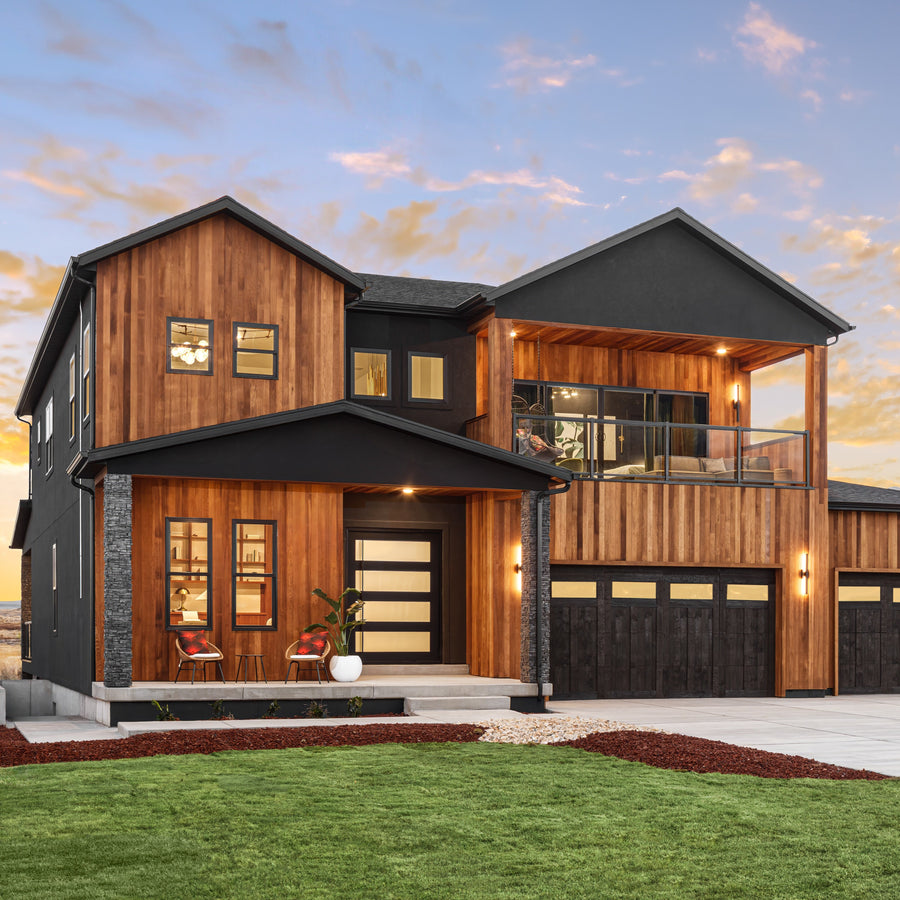
What Washington's Climate Demands From Your Doors
Puget Sound: Persistent Moisture and Marine Air
Seattle receives 37 inches of rain per year — less than New York or Houston — but the difference is distribution. Over 150 days of overcast skies and light rain create sustained moisture exposure that never fully dries out. Relative humidity averages 75 to 80 percent through fall and winter. This persistent dampness is worse for building materials than heavy downpours because it penetrates wood continuously rather than in bursts. Wood doors in the Puget Sound region swell, stick, develop mold, and eventually rot — not from storms, but from the relentless daily moisture that defines the Pacific Northwest. Steel doors with powder-coated finishes and sealed weatherstripping resist this environment completely, never absorbing moisture and never creating the conditions mold needs to colonize.
The Eastside: Tech Wealth and Wind Exposure
Bellevue, Kirkland, Medina, and the communities east of Lake Washington share Seattle's marine climate but add exposure to outflow winds from the Cascade passes. The convergence zone between Puget Sound and the Cascades creates localized wind events and enhanced precipitation in the foothills. More importantly, the Eastside is home to Microsoft, Amazon, Meta, and Google offices — creating a tech-wealth residential market where median home prices in Clyde Hill and Medina exceed $3 million and properties on Hunts Point — one of America's wealthiest neighborhoods — trade for $10 to $30 million. At these price points, a door that shows moisture damage within a few Pacific Northwest winters is unacceptable. Steel delivers permanence in a climate that actively degrades every organic building material.
Eastern Washington: Continental Extremes and Wildfire
East of the Cascades, the climate shifts dramatically. Spokane experiences genuine four-season weather — summers above 100 degrees, winters well below zero, and daily temperature swings of 30 to 40 degrees much of the year. The Columbia Basin around the Tri-Cities combines desert heat with irrigation-driven humidity. Eastern Washington also faces growing wildfire risk — the 2020 Labor Day fires burned over 600,000 acres in a single week, and recent seasons have consistently ranked among the worst in state history. Steel doors with thermal break technology handle the continental temperature extremes while noncombustible construction meets the WUI fire codes increasingly required in eastern Washington communities.
The Cascadia Subduction Zone: Seismic Reality
USGS and Pacific Northwest Seismic Network research puts the probability of a major Cascadia Subduction Zone earthquake at approximately 10 to 15 percent in the next 50 years — a magnitude 9.0 event that would dwarf anything in modern American history. When an earthquake hits, wood door frames rack — they twist out of square — and the door jams shut, blocking the egress route you need most. The 2001 Nisqually earthquake (6.8 magnitude) caused over $2 billion in damage across the Puget Sound region from a relatively moderate event. Welded steel frames maintain structural integrity during seismic shaking and integrate into the building's continuous load path. A door that still opens after the next Cascadia event isn't a luxury feature — it's a survival feature.
Washington Building Codes: Why Steel Has the Advantage
Washington State Energy Code
Washington's State Energy Code — one of the strictest in the nation — requires glazed doors to achieve U-factors of 0.30 or lower across most of the state's climate zones. The 2021 code update tightened requirements further, and Seattle's local amendments push beyond even the state standard. Air infiltration limits of 0.30 CFM per square foot at 75 Pascals apply to all exterior doors — a requirement that eliminates most standard door assemblies. Steel doors with thermal breaks and low-E glazing packages meet these stringent requirements while maintaining the large glass areas that Pacific Northwest architecture demands for capturing natural light during the region's dark winter months.
Seismic Design Requirements
Washington's building codes incorporate Seismic Design Category D for most of western Washington — the same category applied to the San Francisco Bay Area. Exterior door assemblies must resist lateral loads and maintain operability after seismic events. Welded steel frames integrated into the building's structural system provide the lateral resistance and dimensional stability that wood frames cannot maintain under seismic shaking. This requirement isn't theoretical — it's based on the documented performance of building assemblies during the Nisqually earthquake and the projected impacts of a full Cascadia rupture.
Eastern Washington WUI Fire Codes
After the devastating 2020 fire season and continuing wildfire expansion, eastern Washington communities from Wenatchee to Spokane to the Tri-Cities have adopted or strengthened Wildland-Urban Interface building codes. Exterior doors in WUI zones must be noncombustible or ignition-resistant. As development pushes into forested areas across the eastern slopes of the Cascades, these requirements expand annually. Steel is inherently noncombustible and exceeds WUI fire rating requirements — a growing necessity as climate change extends Washington's fire season deeper into fall and earlier into spring each year.
Tap any door to explore sizes, configurations, and pricing
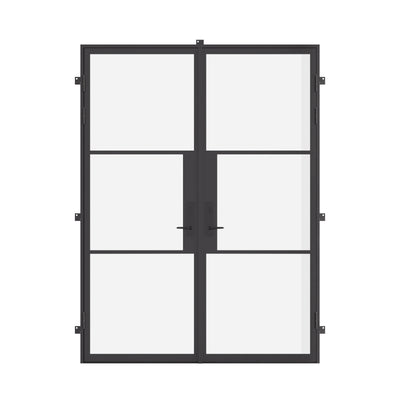
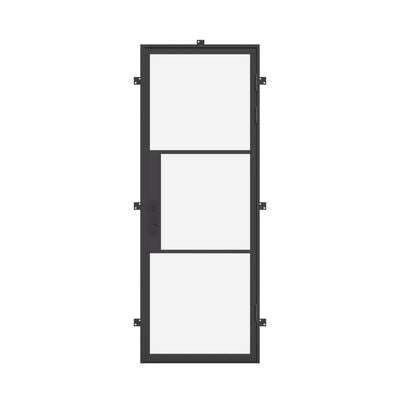
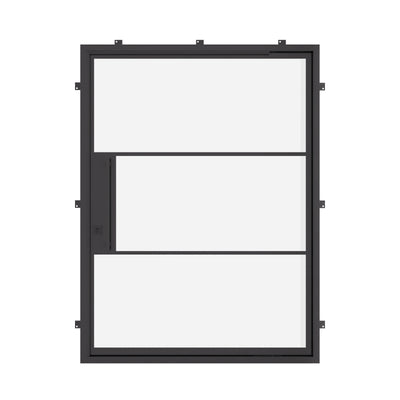
Steel Door Styles Washington Homeowners Love
Air 4 and Air 5 Single and Double Doors — Full glass panels with slim steel frames are essential in a region where maximizing natural light is an architectural priority. The Air 4 Double Flat delivers the light-flooding contemporary entries that define new construction in Medina, Clyde Hill, and Seattle's Capitol Hill — where overcast winter days make every lumen of natural light through the front door valuable. The Air 4 Single Flat fits the renovated Craftsman bungalows of Ballard, Wallingford, and Tacoma's North End. The Air 5 Single Flat offers maximum glass for entries where light penetration is the primary design goal. Steel frames resist the moisture absorption and swelling that plagues wood doors through Pacific Northwest winters.
Pivot Doors — The statement entry for Washington's tech-wealth luxury market. The Air 4 Pivot and Knox Pivot create the dramatic double-height entries that Medina, Hunts Point, and Mercer Island waterfront estates demand — properties where $10 to $30 million price tags require an entry that matches. Steel pivot doors maintain their operation through Pacific Northwest moisture without the swelling, binding, and mold that destroy wood pivot doors within a few wet winters.
Iron Doors — Wrought iron detailing complements the Craftsman tradition that defines Pacific Northwest architecture. The Air 4 Single Full Arch and Air 4 Double Full Arch honor the ironwork and handcrafted detailing of Seattle's Craftsman bungalows, Tacoma's historic Stadium District, and the Arts and Crafts-inspired homes throughout the region. Iron doors provide the moisture resistance the climate demands while delivering the artisan aesthetic that Pacific Northwest homeowners value.
French Doors — When the sun comes out in the Pacific Northwest, the entire region moves outdoors. French doors in steel deliver the expansive glass and elegant proportions that connect Washington homes to their gardens, decks, and water views. Whether opening onto a Seattle rooftop terrace, a Bainbridge Island garden, or a Lake Chelan patio, steel French doors provide the thermal performance Washington's strict energy codes demand while resisting the moisture that rots wood French doors from the bottom up.
Bi-Fold and Sliding Doors — The Air 4 Bi-Fold creates the indoor-outdoor transitions that Pacific Northwest architecture is designed around — capturing water views, garden access, and the precious summer sunshine when it arrives. Popular in waterfront homes on Mercer Island, Bainbridge Island, and the San Juan Islands, and increasingly specified in Seattle's new construction where walls of glass are the defining luxury feature. Steel frames maintain weathertight seals through the 150-plus days of rain while resisting the moisture absorption that jams wood and aluminum tracks.
Washington's Architectural Landscape: City by City
Seattle: Craftsman Capital of the West
Seattle is America's Craftsman capital — more Craftsman bungalows survive here per capita than in any other major city. Wallingford, Ballard, Queen Anne, and Capitol Hill preserve thousands of these 1910-1930 homes with their characteristic wide porches, exposed rafter tails, and handcrafted detailing. The city simultaneously embraces cutting-edge contemporary design — the South Lake Union tech corridor, Capitol Hill's modern infill, and the floating homes of Lake Union represent Pacific Northwest modernism at its most innovative. Madison Park and Laurelhurst offer traditional luxury, while Magnolia's waterfront commands views of Puget Sound and the Olympic Mountains. Iron doors suit the Craftsman neighborhoods while Air 4 and pivot doors define the contemporary market.
The Eastside: Bellevue, Medina, and Tech Wealth
Medina and Hunts Point — home to Bill Gates, Jeff Bezos, and other tech billionaires — represent some of the most expensive residential real estate on the West Coast. Clyde Hill's hilltop lots with lake and mountain views command $3 to $10 million. Bellevue's downtown transformation from suburban mall to urban tech hub has driven luxury high-rise and townhouse development. Kirkland's waterfront and Woodinville's wine country estates extend the Eastside's luxury footprint. In a market where the tech industry's aesthetic sensibility expects precision, quality, and contemporary design, steel and glass entries are the natural fit — delivering both the look and the performance the Pacific Northwest demands.
Tacoma: Craftsman Heritage, Urban Renaissance
Tacoma preserves what many consider the finest collection of Craftsman homes in Washington — the Stadium District, North End, and Proctor neighborhoods showcase impeccably maintained bungalows and larger Craftsman homes with views of Commencement Bay and Mount Rainier. The city's revitalized Museum District and Brewery District are attracting contemporary infill development. Tacoma's more affordable prices compared to Seattle are drawing buyers who demand the same quality materials — including steel entry doors that handle the same maritime climate while honoring Tacoma's architectural heritage.
Bainbridge Island and the San Juans: Pacific Northwest Coastal
A 35-minute ferry from Seattle, Bainbridge Island combines rural Pacific Northwest beauty with easy access to the city — creating a market where $1 to $5 million homes blend Northwest lodge, coastal contemporary, and renovated farmhouse styles. The San Juan Islands — Friday Harbor, Orcas Island, Lopez Island — offer more remote luxury where salt air, sustained wind, and marine exposure demand corrosion-resistant materials. Steel doors with marine-grade powder coatings handle the island environment while delivering the architectural quality these communities expect.
Spokane: Four Seasons, Affordable Elegance
Spokane's South Hill and Manito neighborhoods preserve Craftsman, Tudor Revival, and Colonial homes that rival Seattle's historic stock at a fraction of the price. The Cliff/Cannon neighborhood and Browne's Addition offer walkable urban living with Victorian and early 20th-century architecture. New construction in developments like Painted Hills and Five Mile Prairie blends contemporary and transitional styles. Spokane's genuine four-season climate — hot summers, cold winters, and everything between — demands doors that handle the full range. Steel with thermal breaks delivers the performance eastern Washington's continental climate requires.
Choosing the Right Color for Washington Homes
Craftsman: Dark bronze, oil-rubbed finishes, and forest green honor the Arts and Crafts tradition that defines Pacific Northwest residential architecture. These earthy tones complement cedar siding, exposed timber, brick, and the moss-covered stone that characterizes the region's most cherished Craftsman neighborhoods. The door should feel handcrafted and natural — a continuation of the Craftsman philosophy.
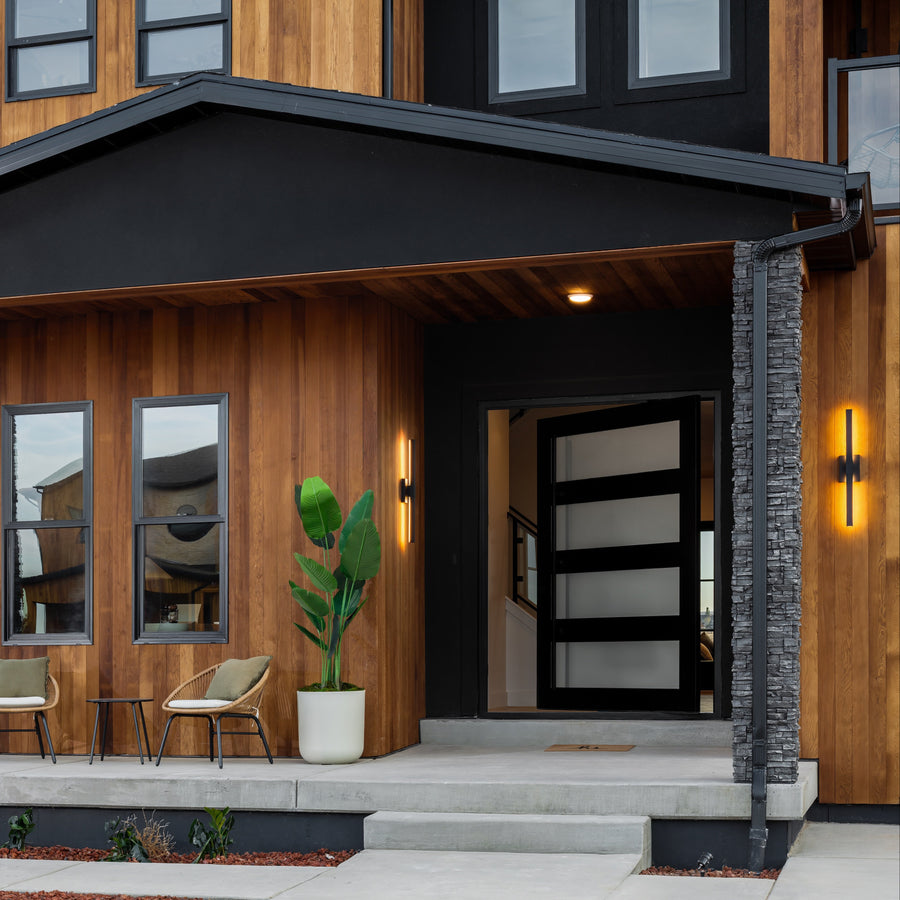
Pacific Northwest Contemporary: Matte black dominates the region's contemporary market — creating bold contrast against natural wood cladding, concrete, and weathering steel that define the Pacific Northwest modern idiom. A black steel door against western red cedar siding is the signature combination in Seattle, Bellevue, and the Islands. Gunmetal works where the palette is cooler — exposed concrete, zinc cladding, gray stone.
Coastal and Island: Weathered tones, soft grays, and muted blues complement the marine environment without competing with water and mountain views. These finishes blend with the driftwood-gray cedar shingle and painted clapboard that characterize Pacific Northwest coastal homes. Marine-grade powder coatings resist the salt air corrosion that's constant in the San Juans and along the Sound.
Lodge and Mountain: Dark bronze and iron oxide finishes complement the heavy timber, natural stone, and metal roofing of Pacific Northwest lodge architecture — whether in Leavenworth's Bavarian-themed community, Winthrop's western aesthetic, or the mountain contemporary homes of Cle Elum and Suncadia. Warm tones blend with the evergreen forest palette.
Victorian and Colonial: Deep, saturated tones — burgundy, navy, forest green, charcoal — honor the Victorian and Colonial Revival traditions preserved in Spokane's South Hill, Port Townsend's historic waterfront, and Tacoma's Stadium District. These rich colors complement detailed millwork and period-appropriate hardware.
PINKYS uses an automotive-grade paint system that can match virtually any color specification. In Washington's persistent moisture environment — where 150-plus days of dampness test every finish — our coatings resist the mildew, peeling, and moisture-driven failure that destroy lesser finishes within a few Pacific Northwest winters.
Why Washington Homeowners Choose Steel
In a state where the median home price exceeds $580,000 — and routinely surpasses $3 million on the Eastside, $2 million on Mercer Island, and $5 million-plus in Medina and Hunts Point — a steel door investment of $5,000 to $15,000 represents a fraction of property value with outsized impact on curb appeal, energy performance, and perceived quality. Steel entry doors return 188 to 216 percent ROI according to industry data, and in Washington's competitive tech-wealth market where precision and quality are expected, the front door is the first signal of what's inside.
Beyond resale, steel doors eliminate the maintenance cycle that Pacific Northwest moisture inflicts on wood — no annual refinishing as dampness destroys the finish, no swelling and sticking through wet winters, no mold growth on door surfaces, no progressive rot from sustained moisture exposure. A steel door installed today will outlast the next three wood doors, performing through decades of Pacific Northwest rain, the occasional windstorm, and the big earthquake when it comes — without complaint. In a climate engineered to destroy wood, steel is the material that thrives.
Transform Your Washington Home
Whether you're renovating a Seattle Craftsman, building contemporary on the Eastside, upgrading waterfront on Mercer Island, fire-proofing in eastern Washington, or honoring Victorian heritage in Tacoma, PINKYS has steel and iron doors engineered specifically for what Washington demands.
We ship nationwide with fast, reliable delivery — and our doors are built to handle everything the Pacific Northwest throws at them, from persistent marine moisture to mountain snow to the seismic reality of the Cascadia zone.
Contact Our Team or call 844-843-6677