Florida doesn't test your front door — it tries to destroy it. Category 4 hurricanes drive debris at 150 mph into anything standing. Salt air corrodes unprotected metal within months. Humidity above 80 percent for half the year swells wood until it won't open. Termites cause more property damage here than in any other state. And the sun — relentless, subtropical UV that bleaches and cracks every finish not engineered to resist it. If a door can survive Florida, it can survive anywhere.
Steel and iron doors aren't just a style choice for Florida homes — they're the engineering answer to a state that destroyed 63,000 homes in Hurricane Andrew alone. Wood rots in the humidity, fiberglass cracks under impact, and aluminum conducts too much heat to meet energy codes. Add Miami-Dade's hurricane impact requirements — the strictest in the nation — and Florida's increasingly aggressive energy standards, and steel becomes less of an upgrade and more of a necessity.
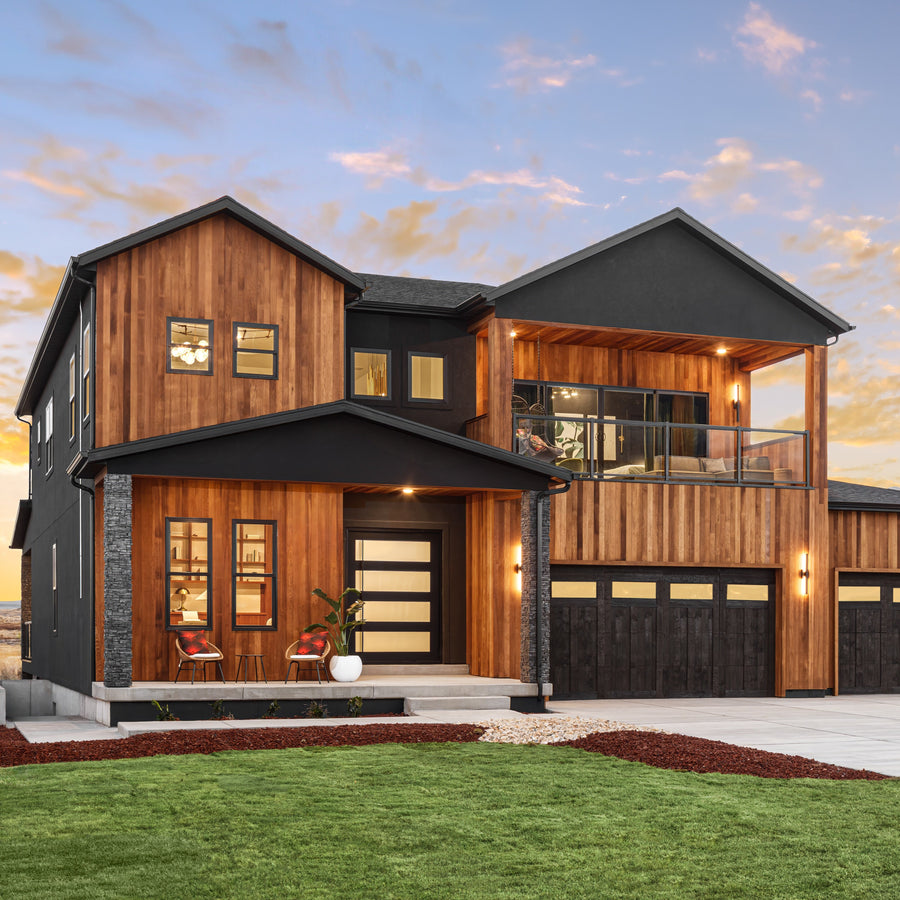
What Florida's Climate Demands From Your Doors
South Florida: Hurricanes, Salt Air, and Relentless Humidity
Miami averages 75 percent relative humidity year-round, spiking above 90 percent in summer mornings. Salt air penetrates miles inland from both coasts. Hurricane Andrew in 1992 destroyed 63,000 homes and caused $27.3 billion in damage — the event that rewrote Florida's entire building code. Hurricane Irma in 2017 damaged every building in the Florida Keys. This environment makes South Florida the toughest test for any door material on the continent. Steel doors with powder-coated finishes, marine-grade hardware, and impact-resistant glazing survive where wood swells shut within a year and fiberglass yellows and cracks within two seasons of subtropical sun.
The Gulf Coast: Hurricane Alley and Coastal Erosion
From Naples to Pensacola, Florida's Gulf Coast absorbs more hurricane landfalls than any other stretch of American coastline. Hurricane Ian in 2022 hit Fort Myers Beach with 150 mph winds and a 15-foot storm surge, causing over $110 billion in damage — the costliest Florida hurricane in history. Hurricane Michael struck the Panhandle in 2018 as a Category 5 with 160 mph winds, flattening Mexico Beach. Between storms, the Gulf's warm waters drive humidity, afternoon thunderstorms with 60 mph gusts, and salt-laden air that corrodes every exposed surface. Steel doors with impact-rated glazing and corrosion-resistant coatings don't just meet code here — they're the difference between a door that survives the next storm and one that becomes a projectile.
Central Florida: Heat, Storms, and Year-Round UV
Orlando averages 233 sunny days per year with summer temperatures routinely hitting 95 degrees and heat indices above 110. Afternoon thunderstorms from June through September bring frequent lightning — Central Florida is the lightning capital of the United States — along with microbursts, hail, and straight-line winds exceeding 70 mph. The daily cycle of intense heat, afternoon storms, and overnight humidity creates thermal and moisture cycling that warps wood doors within seasons. Steel with thermal break technology handles this cycling without dimensional change, while automotive-grade coatings resist the UV degradation that destroys lesser finishes within a few years of Florida sun.
North Florida: The Overlooked Climate Challenge
Jacksonville and the First Coast experience a climate most people don't associate with Florida — occasional freezes, ice storms, and winter temperatures in the 20s and 30s alongside brutal summer heat and humidity. The temperature differential between a 30-degree January morning and a 97-degree July afternoon stresses every seal and joint in a door assembly through dramatic seasonal expansion and contraction. Add nor'easters that drive salt spray well inland and the same termite pressure that plagues the rest of the state, and North Florida demands a door material engineered for the full range. Steel delivers where wood and fiberglass compromise.
Florida Building Codes: Why Steel Has the Advantage
The Florida Building Code and Hurricane Impact Requirements
The Florida Building Code — rewritten after Hurricane Andrew — is among the strictest in the nation. The High-Velocity Hurricane Zone (HVHZ) covering Miami-Dade and Broward Counties requires all exterior openings to pass large missile impact testing: a 9-pound 2x4 lumber projectile launched at 50 feet per second, followed by cyclic pressure testing simulating sustained hurricane-force winds. Outside the HVHZ, the windborne debris region extends across most of coastal Florida, requiring impact resistance or approved shuttering systems. Steel doors meet these impact ratings with laminated or tempered impact glass and welded frames that maintain structural integrity under the extreme pressure differentials hurricanes create.
Florida Energy Code
Florida's energy code requires glazed doors to achieve U-factors of 0.40 or lower in the state's climate zones 1 and 2 — covering essentially the entire state. Solar heat gain coefficients of 0.25 or lower are required in most jurisdictions to reduce cooling loads in a state where air conditioning runs 8 to 10 months per year. Standard aluminum doors fail these requirements because aluminum conducts heat too readily. Steel doors with thermal breaks and low-E glazing packages meet both U-factor and SHGC requirements, reducing the cooling costs that make up the largest portion of Florida utility bills — often exceeding $250 per month in summer.
Coastal Construction Control Lines
Florida's Coastal Construction Control Line (CCCL) regulations impose additional structural requirements on buildings seaward of the line — which runs along the state's entire coastline. Doors in these zones must resist wave action, storm surge, and sustained wind loads beyond standard code. Welded steel frames anchored into reinforced concrete meet these structural demands where wood frames rack and fail under lateral loads. For coastal Florida homeowners, steel doors provide both the structural performance the code demands and the corrosion resistance the environment requires.
Tap any door to explore sizes, configurations, and pricing
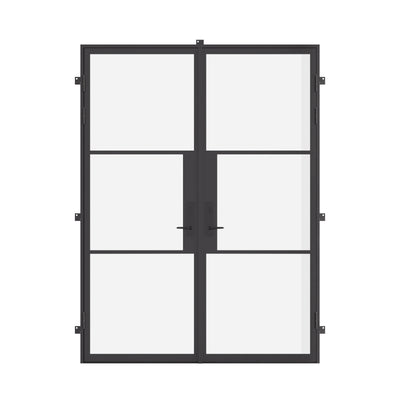
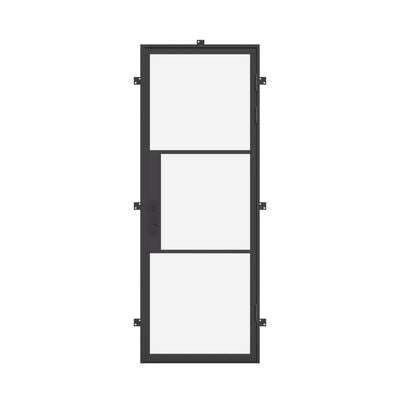
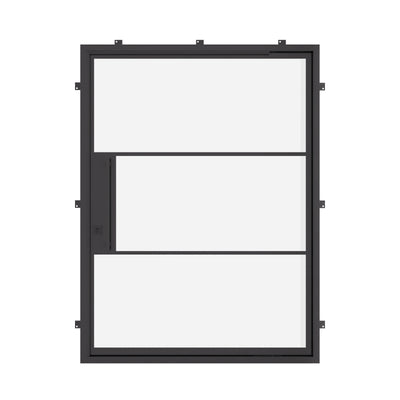
Steel Door Styles Florida Homeowners Love
Air 4 and Air 5 Single and Double Doors — Full glass panels with slim steel frames maximize natural light while meeting Florida's impact requirements. The Air 4 Double Flat delivers the contemporary glass-and-steel aesthetic dominating new construction in Miami Beach, Naples, and Tampa's Bayshore Boulevard, while the Air 4 Single Flat fits the modern coastal homes of Delray Beach, Sarasota, and Jacksonville Beach. The Air 5 Single Flat offers wider glass panels for maximum light in entries shaded by covered porches — a Florida architectural staple. The welded steel frame handles hurricane impacts that would shatter aluminum equivalents.
Pivot Doors — The statement entry for Florida's luxury waterfront market. The Air 4 Pivot and Knox Pivot rotate on floor-mounted pivots to create the dramatic double-height entries that Star Island, Fisher Island, and Palm Beach estates demand. In a state where the front door faces the street but the real drama faces the water, pivot doors create the grand arrival experience that sets the tone for everything behind them. Steel pivot doors span openings impossible with wood while the pivot mechanism distributes weight without stressing frames — critical in a state where foundation settlement is common on limestone and sand.
Iron Doors — Wrought iron is architecturally native to Florida's Mediterranean Revival and Spanish Colonial homes — the dominant architectural tradition from Coral Gables to Palm Beach. The Air 4 Single Full Arch and Air 4 Double Full Arch honor the arched doorways of George Merrick's original Coral Gables vision and the Addison Mizner Mediterranean estates that define Palm Beach's architectural identity, delivering hurricane-rated impact resistance wrapped in historical authenticity.
French Doors — Florida's lifestyle revolves around the transition between air-conditioned interior and pool deck, lanai, or waterfront terrace. French doors in steel deliver the expansive glass and elegant proportions this indoor-outdoor lifestyle requires. Whether you're opening onto a loggia in a Coral Gables Mediterranean or a screened lanai in Naples, steel French doors provide the impact resistance Florida code demands without sacrificing the light and openness the lifestyle is built around.
Bi-Fold and Sliding Doors — The Air 4 Bi-Fold stacks its steel panels to erase the boundary between great room and outdoor living — the defining feature of contemporary Florida architecture. Popular in waterfront homes from Key Biscayne to Clearwater Beach, and increasingly specified in new construction across Naples and Sarasota where disappearing walls are the expectation. Impact-rated steel bi-folds eliminate the need for separate hurricane shutters while delivering the wide-open living Florida homeowners demand.
Florida's Architectural Landscape: City by City
Miami and Coral Gables: Art Deco to Mediterranean Revival
Miami's architectural range spans a century — the pastel Art Deco hotels of South Beach's historic district, the Mediterranean Revival mansions George Merrick designed into Coral Gables' master plan in the 1920s, the Mid-Century Modern (MiMo) hotels and apartments of the North Beach/Upper East Side, and the ultra-contemporary glass towers and waterfront estates of Miami Beach and Key Biscayne. Coral Gables' architectural review board actively preserves Merrick's vision, making wrought iron doors with arched tops not just appropriate but expected. On Star Island and Fisher Island — where homes routinely sell for $20 to $50 million — contemporary steel and glass pivot doors create the dramatic entries the market demands.
Palm Beach: Old-Money Mediterranean
Addison Mizner built Palm Beach's architectural identity in the 1920s — Mediterranean Revival mansions with barrel-tile roofs, stucco walls, and elaborate wrought iron detailing. The Air 4 Double Full Arch honors this tradition on the island where the median home price exceeds $3 million and oceanfront estates routinely trade above $30 million. North of the inlet, Jupiter Island and Hobe Sound offer slightly more contemporary interpretations of the same tropical luxury aesthetic, where Air 4 double doors and pivot entries dominate new construction.
Naples and Southwest Florida: Coastal Luxury
Port Royal — where waterfront lots alone sell for $10 to $30 million — sets the tone for Naples luxury. Mediterranean, British West Indies, and coastal contemporary styles dominate, all requiring doors that balance elegance with hurricane performance. Old Naples' walkable grid of streets south of Fifth Avenue preserves a more intimate scale, while Bonita Bay, Pelican Bay, and Marco Island expand the luxury footprint. The salt air here is relentless, and steel doors with marine-grade powder coatings outperform every alternative in Southwest Florida's corrosive coastal environment.
Tampa Bay: Craftsman Heritage Meets Waterfront Modern
South Tampa's Hyde Park and Beach Park neighborhoods preserve Craftsman bungalows and Mediterranean cottages from the 1920s alongside $3 to $8 million new builds on Bayshore Boulevard — the world's longest continuous sidewalk along a bay. St. Petersburg's revitalized downtown and waterfront districts blend Art Deco preservation with contemporary glass architecture. Davis Islands and Harbour Island combine walkable urban living with waterfront access and a mix of traditional and modern styles. Iron doors suit the historic neighborhoods while Air 4 and pivot doors own the new-construction waterfront market.
Jacksonville: Southern Charm, Coastal Edge
Riverside and Avondale — Jacksonville's premier historic neighborhoods — preserve one of the largest collections of Prairie-style, Colonial Revival, and Craftsman homes in the Southeast, all along the scenic St. Johns River. Ponte Vedra Beach and Atlantic Beach offer luxury coastal living where salt air corrosion resistance is non-negotiable. San Marco's tree-lined streets and Mediterranean-influenced architecture create a walkable neighborhood where iron doors with arched tops complement the existing character. Steel doors serve both the historic preservation market and the contemporary new construction transforming Jacksonville's urban core.
Choosing the Right Color for Florida Homes
Mediterranean and Spanish Revival: Wrought iron black and dark bronze finishes complement the stucco, barrel tile, and arched motifs that define Coral Gables, Palm Beach, and Naples. Rich warm tones echo the existing iron railings, balconies, and window grilles that are signature to Florida's Mediterranean tradition.
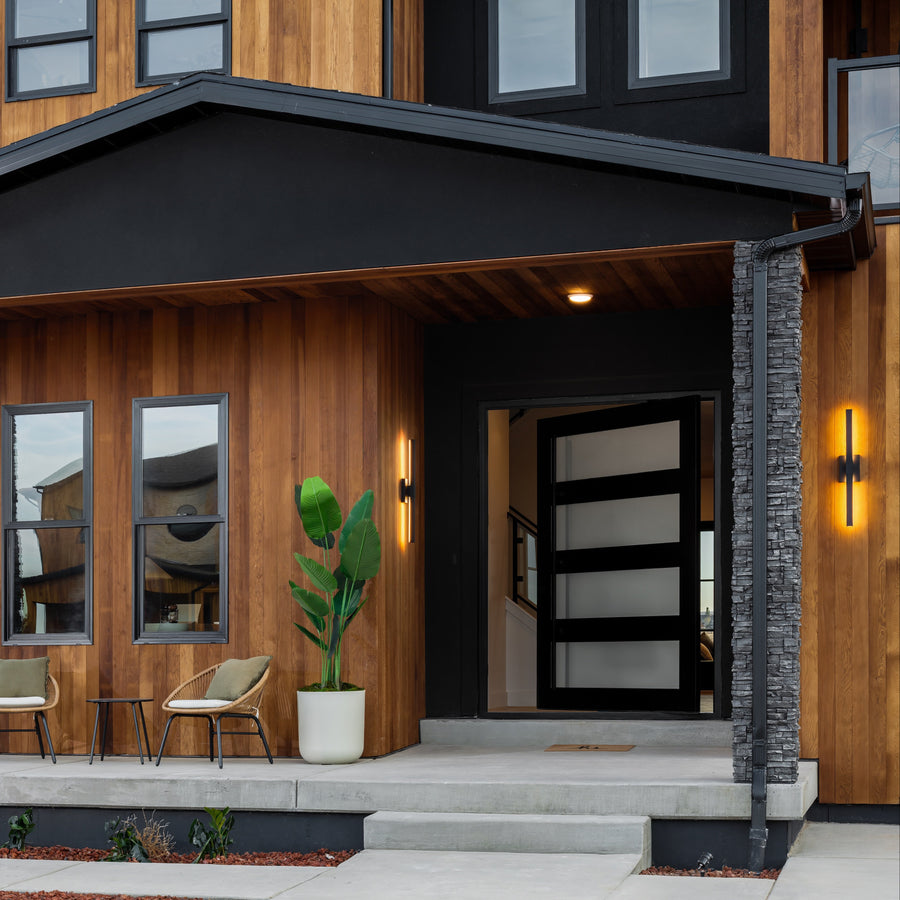
Modern and Contemporary: Matte black dominates Florida's luxury contemporary market from Miami Beach to Naples. Gunmetal and dark charcoal create the bold contrast against white or light-toned walls that architects are specifying across South Florida's waterfront new construction. A dark steel door against white stucco delivers the dramatic effect trending in high-end Florida architecture.
Coastal: Lighter steel finishes, white, and soft gray tones complement waterfront and beach-adjacent homes without competing with ocean views. Warm whites and sand tones work better than stark white — Florida's intense sun makes pure white read harsh. Marine-grade powder coatings in these lighter shades resist the salt air corrosion that destroys lesser finishes within months.
Art Deco and MiMo: Clean matte finishes in black, white, or metallic tones maintain the geometric precision and streamlined profiles original to these styles. Minimalist hardware. The door should feel like a continuation of the building's facade design — not a separate element. In Miami Beach's historic districts, architectural review boards actively evaluate door selections for period compatibility.
Craftsman and Colonial Revival: Dark bronze and oil-rubbed finishes honor the traditional architecture of Jacksonville's Riverside, Tampa's Hyde Park, and Winter Park's brick-lined streets. Earthy tones — deep brown, forest green, iron oxide — blend with the brick, stone, and detailed woodwork these neighborhoods were built around.
PINKYS uses an automotive-grade paint system that can match virtually any color specification. In Florida's extreme UV and salt air environment, finish durability is everything — our coatings resist the fading, chalking, and corrosion that destroy lesser finishes within a single Florida year.
Why Florida Homeowners Choose Steel
In a state where the median home price exceeds $400,000 — and routinely surpasses $1 million in coastal markets from Palm Beach to Naples — a steel door investment of $5,000 to $15,000 represents a fraction of property value with outsized impact on curb appeal, hurricane protection, and perceived quality. Steel entry doors return 188 to 216 percent ROI according to industry data, and in Florida's competitive luxury market where international buyers drive waterfront prices, premium entry features are expected, not optional.
Beyond resale, steel doors eliminate the punishing maintenance cycle Florida inflicts on wood — no annual refinishing in the humidity, no warping from moisture absorption, no termite damage (Florida's #1 property destroyer after hurricanes), no hurricane vulnerability. A steel door installed today meets impact code, resists salt air corrosion, and handles Florida's thermal cycling without complaint — performing through decades of hurricane seasons while wood doors need replacement every 5 to 7 years in this environment.
Transform Your Florida Home
Whether you're restoring Mediterranean in Coral Gables, building contemporary on Miami Beach, preserving Craftsman charm in Tampa's Hyde Park, upgrading a waterfront estate in Naples, or hurricane-proofing on the Gulf Coast, PINKYS has steel and iron doors engineered specifically for what Florida demands.
We ship nationwide with fast, reliable delivery — and our doors are built to handle everything Florida throws at them, from Category 4 hurricanes to relentless salt air and subtropical sun.
Contact Our Team or call 844-843-6677