Massachusetts delivers one of the most punishing four-season climates on the East Coast — and your front door takes every hit. Nor'easters bury Boston under feet of snow while driving salt spray and wind across every coastal surface. The January 2018 "bomb cyclone" froze the Atlantic coastline and drove ice into Boston Harbor. Summer heat indices exceed 100 with humidity that makes wood doors swell shut. And the 100-plus freeze-thaw cycles per year progressively destroy every building material not engineered for New England's relentless seasonal assault.
Steel and iron doors aren't just an aesthetic choice for Massachusetts homes — they're the engineering answer to a state where wood warps through seasonal humidity swings, cracks from freeze-thaw cycling, and requires refinishing every few years to survive the salt air and UV. Add the Stretch Energy Code — one of the nation's strictest — and a real estate market where Back Bay brownstones trade for $3 to $10 million and Cape Cod waterfront exceeds $5 million, and steel becomes the material that delivers both performance and permanence in a state built on both.
What Massachusetts's Climate Demands From Your Doors
Greater Boston: Nor'easters, Coastal Exposure, and Urban Heat
Boston averages 48 inches of snow per year, but the legendary winter of 2014-2015 dropped 110 inches — collapsing roofs and burying the city for weeks. Nor'easters hit the coast multiple times per winter with sustained winds above 50 mph and salt spray that penetrates miles inland. The urban heat island effect pushes summer temperatures above 100 with humidity that makes wood doors swell. Over 100 freeze-thaw cycles per year work moisture into every crack and joint, progressively destroying wood seals and finishes. Steel doors with powder-coated finishes, thermal breaks, and compression weatherstripping resist this year-round assault without the dimensional change that plagues wood through New England's extreme seasonal range.
Cape Cod, Martha's Vineyard, and Nantucket: Coastal Extremes
The Cape and Islands take the full force of Atlantic weather — nor'easters, hurricanes, sustained salt air, and wind exposure that make this one of the most corrosive residential environments in North America. The Hurricane of 1938 devastated the New England coast with a 17-foot storm surge. Hurricane Bob in 1991 caused $1.5 billion in damage. Between storms, the salt air is relentless — corrosion begins within months on unprotected surfaces. Summer humidity alternates with winter wind chills well below zero. Steel with marine-grade powder coatings and corrosion-resistant hardware is the only door material that maintains both appearance and function through decades of Cape Cod weather.
The Berkshires: Mountain Cold and Culture
Western Massachusetts's Berkshire Hills combine mountain weather — heavy snow, subzero temperatures, and ice storms — with one of New England's most sophisticated cultural and residential markets. Great Barrington, Stockbridge, and Lenox attract $1 to $5 million vacation and retirement properties. Winter temperature differentials between heated interiors and minus-15-degree exteriors create condensation on poorly insulated doors. Steel with thermal break technology prevents this condensation while resisting the altitude UV that degrades finishes at elevation.
Massachusetts Building Codes: Why Steel Has the Advantage
Stretch Energy Code
Massachusetts' Stretch Energy Code — voluntarily adopted by over 300 municipalities including Boston, Cambridge, and most affluent communities — exceeds the base state code significantly. Glazed doors must achieve U-factors of 0.28 or lower in Stretch Code communities — among the strictest requirements in the nation. The 2023 Specialized Opt-In Code pushes even further toward net-zero. Steel doors with advanced thermal breaks and triple-pane glazing options meet even the most aggressive Massachusetts energy requirements.
Coastal Construction and Flood Zones
Massachusetts Coastal Zone Management regulations and FEMA flood zone requirements mandate structural performance for doors in coastal flood and velocity zones. Post-Sandy awareness has driven stricter enforcement across the South Shore, Cape Cod, and the Islands. Steel doors meet these structural requirements while providing the corrosion resistance coastal installations demand.
Historic District Compatibility
Boston's historic districts — Back Bay, Beacon Hill, the South End, Charlestown — are governed by the Boston Landmarks Commission, which reviews all exterior changes. Cambridge, Salem, and Nantucket maintain similarly strict standards. Iron doors with period-appropriate detailing meet these review requirements while delivering the energy and weather performance that 19th-century wood doors never provided.
Tap any door to explore sizes, configurations, and pricing


Steel Door Styles Massachusetts Homeowners Love
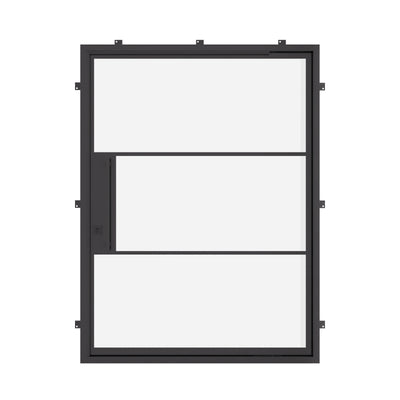
Air 4 and Air 5 Single and Double Doors — The Air 4 Double Flat serves the luxury market from Back Bay to the Cape — maximizing natural light in a region where dark winter days make every photon through the front door valuable. The Air 4 Single Flat fits renovated brownstones, Cambridge Victorians, and the modern Cape Cod homes replacing cottages on waterfront lots. Steel frames handle nor'easter winds and 100-plus freeze-thaw cycles without the warping that plagues wood entries.
Pivot Doors — The Air 4 Pivot and Knox Pivot create dramatic entries for the luxury tier — Weston estates, Wellesley mansions, and the contemporary waterfront homes redefining the Cape and Islands. Steel pivots maintain operation through Massachusetts winters without swelling or binding.
Iron Doors — The Air 4 Single Full Arch and Air 4 Double Full Arch complement the Victorian, Federal, and Georgian architectural heritage that defines Back Bay, Beacon Hill, Salem, and Nantucket. Iron doors honor historic character while meeting Stretch Code energy requirements and Landmarks Commission standards.
French Doors — Steel French doors open Boston homes onto garden patios, Cape Cod decks, and Berkshire terraces — providing the thermal performance the Stretch Code demands while resisting the nor'easter winds and salt air that destroy wood French doors.
Bi-Fold and Sliding Doors — The Air 4 Bi-Fold creates indoor-outdoor transitions on the Cape and Islands — where waterfront great rooms demand walls that open to ocean air. Steel bi-folds maintain weathertight seals through winter while disappearing when summer arrives.
Massachusetts's Architectural Landscape: Region by Region
Boston: America's Historic City
Back Bay's brownstones — built on filled tidal flats between 1860 and 1890 — represent some of America's most valuable residential real estate, with prices from $3 to $10 million. Beacon Hill's Federal-era brick row houses predate the brownstone era, with gas-lit Acorn Street and Louisburg Square defining old-money Boston. The South End's Victorian bow-front row houses form the nation's largest intact Victorian neighborhood. Charlestown's Colonial-era homes overlook the harbor. Each neighborhood demands doors that respect period architecture while meeting modern performance standards — a balance iron and steel doors achieve perfectly.
The Suburbs: Weston, Wellesley, and the MetroWest
Weston, Wellesley, Dover, and Sherborn represent Boston's suburban luxury peak — $2 to $10 million estates on multi-acre lots. Newton's neighborhoods range from Victorian villages to contemporary new construction. Brookline, Lexington, and Concord add historic significance to residential prestige. The architecture spans Colonial Revival, Tudor, Georgian, and contemporary — all requiring entries that project permanence through New England's demanding climate.
Cape Cod and the Islands
Cape Cod's traditional shingle-style cottages are giving way to contemporary builds on waterfront lots — $2 to $10 million properties where the entry door must handle salt air, nor'easters, and the strict design review of communities like Chatham and Osterville. Nantucket's architectural review board mandates weather-shingle exterior materials and period-appropriate detailing — iron doors in dark finishes complement the island's refined aesthetic. Martha's Vineyard spans from Edgartown's whaling captain mansions to Chilmark's contemporary hillside homes.
The Berkshires: Mountain Culture
Great Barrington, Stockbridge, and Lenox — the cultural heart of western Massachusetts — attract $1 to $5 million properties that blend mountain setting with artistic sophistication. Architecture ranges from Colonial farmhouses to Gilded Age estates (including Edith Wharton's The Mount) to contemporary glass pavilions. Steel doors in warm finishes complement both the historic and contemporary traditions.
Choosing the Right Color for Massachusetts Homes
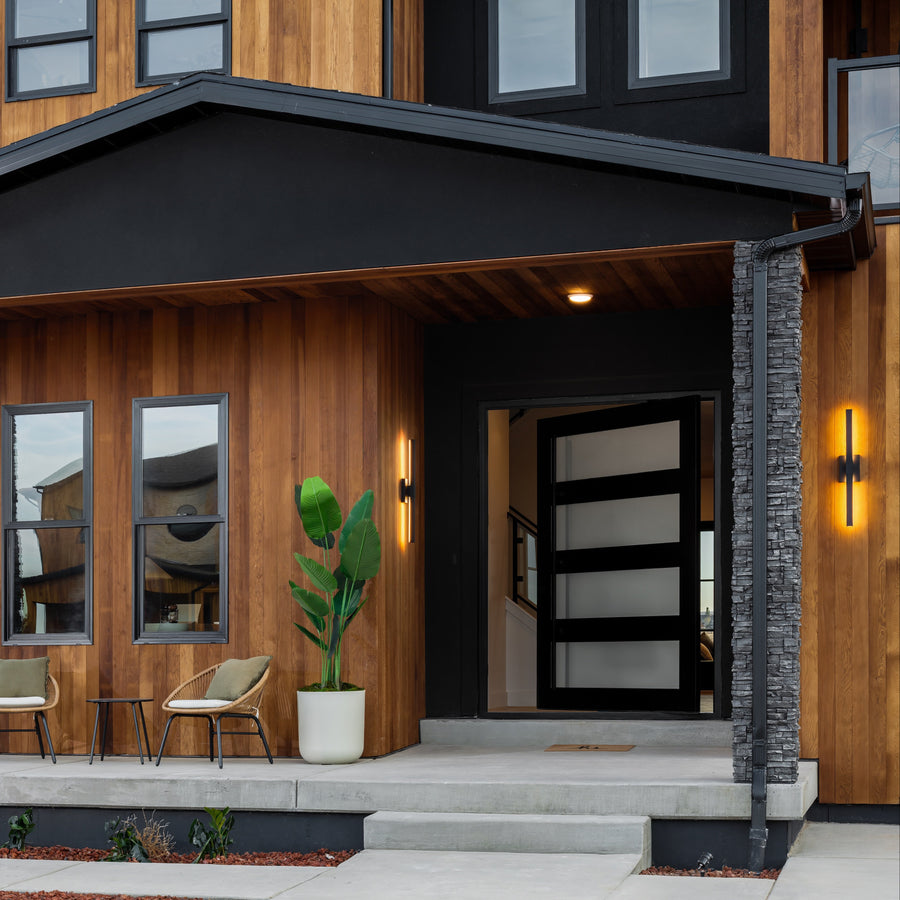
Brownstone and Brick: Matte black is definitive for Boston's brownstone and brick neighborhoods — classic, intentional, and authoritative against the brown and red masonry facades. Dark bronze works for warmer-toned stone.
Cape and Island Coastal: Weathered tones, soft grays, and muted blues complement the cedar shingle and white clapboard traditions. Marine-grade coatings resist the relentless Atlantic salt air.
Suburban Traditional: Dark bronze, forest green, and burgundy complement Tudor, Colonial Revival, and Georgian architecture across the MetroWest and North Shore.
Berkshire Mountain: Dark bronze and warm earth tones complement stone, timber, and the New England landscape palette.
PINKYS uses an automotive-grade paint system engineered for the extremes. In Massachusetts' brutal four-season environment, our coatings resist freeze-thaw, salt air, and UV damage season after season.
Why Massachusetts Homeowners Choose Steel
In a state where the median home price exceeds $580,000 — and surpasses $3 million in Back Bay, $5 million in Weston, and $8 million-plus on Nantucket — a steel door investment delivers outsized returns. Steel entry doors return 188 to 216 percent ROI, and in Massachusetts' educated, quality-conscious market, the front door communicates values.
Steel eliminates the New England maintenance cycle — no freeze-thaw cracking, no salt air corrosion, no humidity-driven swelling, no annual refinishing. Permanent performance through the most demanding four-season climate on the East Coast.
Transform Your Massachusetts Home
Whether you're renovating a Back Bay brownstone, upgrading a Weston estate, building contemporary on the Cape, or mountain-proofing in the Berkshires, PINKYS has steel and iron doors engineered for Massachusetts.
We ship nationwide with fast delivery — our doors handle everything from Boston nor'easters to Cape Cod salt air to Berkshire mountain winters.
Contact Our Team or call 844-843-6677