

New York doesn't have a gentle climate — it has four distinct seasons that each find a different way to punish your front door. Nor'easters bury the city under feet of snow while driving salt spray miles inland. Summer heat and humidity turn wood doors into swollen, sticking liabilities. The freeze-thaw cycle runs over 100 times per year in the metro area, progressively destroying every seal and joint not engineered for the punishment. And upstate, Buffalo averages 95 inches of snow while the Hudson Valley layers ice storms on top of everything else.
Steel and iron doors aren't just an aesthetic upgrade for New York homes — they're an engineering solution for a state where wood warps in the humidity, swells from rain, and cracks through winter after winter of freeze-thaw cycling. Add NYC's strict energy codes, coastal flood zone requirements post-Hurricane Sandy, and a real estate market where Manhattan townhouses trade for $5 to $30 million and Hamptons estates exceed $50 million, and steel isn't a luxury choice — it's the smart investment in a market that demands permanence.
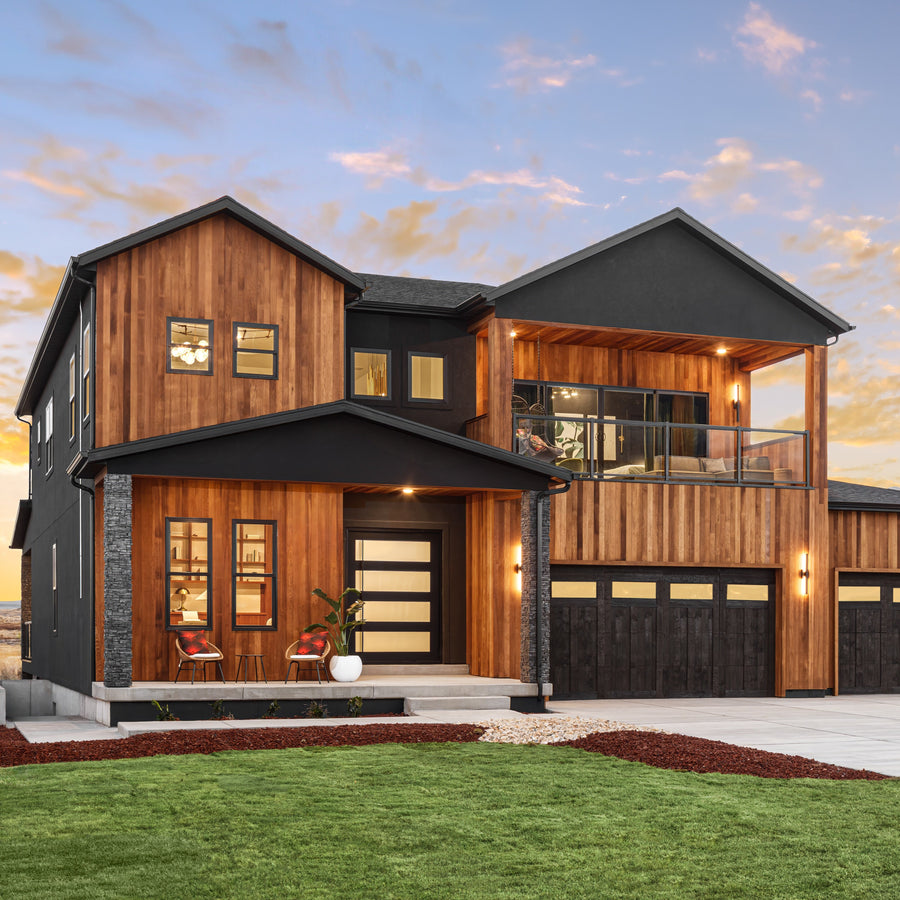
What New York's Climate Demands From Your Doors
New York City: Urban Heat, Nor'easters, and Coastal Exposure
The urban heat island effect pushes NYC summer temperatures 5 to 10 degrees above surrounding areas, with heat indices regularly exceeding 105. Then winter delivers — nor'easters dump 2 to 3 feet of snow while driving wind-blown salt and sand against every exterior surface. The city experiences over 100 freeze-thaw cycles per year, progressively working apart wood joints and cracking rigid seals. Hurricane Sandy in 2012 drove a 14-foot storm surge into Lower Manhattan, redefining flood risk for an entire generation. Salt air from the harbor and Atlantic penetrates deep into Brooklyn, Queens, and Lower Manhattan. Steel doors with powder-coated finishes and marine-grade weatherstripping resist this year-round assault where wood swells in summer, contracts in winter, and progressively deteriorates through each cycle.
Long Island and the Hamptons: Coastal Salt Air and Storm Exposure
From Montauk to the Gold Coast, Long Island's 118-mile length takes the full force of Atlantic weather. Salt air corrodes unprotected metal within a few thousand feet of shore — and in the Hamptons, nearly everything is within that zone. Hurricane-force winds from nor'easters hit the South Fork multiple times per decade, and the exposure to open Atlantic weather means sustained UV, wind-driven rain, and salt spray year-round. Summer humidity above 80 percent alternates with winter wind chills below zero, creating thermal and moisture cycling that destroys wood doors within a few seasons. Steel with marine-grade powder coatings and corrosion-resistant hardware doesn't just survive here — it's the only material that maintains its appearance and function season after season.
The Hudson Valley: Ice Storms and Seasonal Extremes
The Hudson Valley experiences New York's full seasonal range — summer temperatures above 95 with high humidity, winter lows well below zero, and the ice storms that make this region particularly brutal on building materials. Ice accumulation on door frames and thresholds creates sustained freeze conditions that work moisture into every gap, expanding and cracking wood joints and rigid seals progressively. Spring and fall bring dramatic temperature swings of 40-plus degrees in a single day. Steel doors with thermal break technology handle these extremes without the dimensional change that racks wood frames out of square after a few Hudson Valley winters.
Upstate: Lake Effect, Deep Cold, and Heavy Snow
Buffalo averages 95 inches of snow per year. Syracuse gets even more — consistently ranking among America's snowiest cities. Lake-effect storms dump feet of snow in hours, with sustained winds that create massive drifts against door frames. Winter temperatures routinely drop to minus 10 or colder, while summer heat reaches the 90s with Great Lakes humidity. The temperature differential between a heated interior and a subzero exterior creates condensation on the interior surface of poorly insulated doors — a problem that leads to mold, ice formation, and progressive structural damage. Steel doors with insulating glass and thermal break frames eliminate this condensation problem while maintaining structural integrity through snow loads that would rack a wood frame.
New York Building Codes: Why Steel Has the Advantage
NYC Energy Conservation Code
New York City's Energy Conservation Code — updated regularly and among the strictest in the nation — requires glazed doors to achieve U-factors of 0.30 or lower, with strict air infiltration limits that standard doors struggle to meet. The code aligns with NYC's ambitious Climate Mobilization Act (Local Law 97), which mandates aggressive carbon reduction for all building types. Steel doors with thermal breaks and low-E glazing packages exceed these requirements, reducing heating costs in a city where winter utility bills routinely exceed $300 per month in townhouses and brownstones.
New York State Energy Code
The 2020 Energy Conservation Construction Code of New York State applies statewide and requires exterior doors to meet U-factor and SHGC requirements that vary by climate zone — New York spans zones 4 through 6, from the mild Hudson Valley to the brutal Lake Effect belt. In zone 6, which covers most of upstate, glazed doors must achieve U-factors of 0.30 or lower — among the strictest in the country. Standard aluminum doors cannot meet these requirements because aluminum's thermal conductivity is too high. Steel with thermal breaks is the compliant choice.
Coastal Flood Zone Requirements
Post-Hurricane Sandy, New York dramatically expanded its flood zone maps and strengthened building requirements in coastal areas. Doors in V-zones and A-zones must resist hydrostatic and hydrodynamic loads, wind-driven rain, and debris impact. These requirements affect thousands of properties across the Rockaways, Coney Island, Red Hook, Staten Island's East Shore, and Long Island's South Shore. Welded steel frames anchored into reinforced structures meet these load requirements where wood frames fail under lateral water pressure — a lesson Sandy taught at the cost of $19 billion in damage to New York City alone.
Tap any door to explore sizes, configurations, and pricing
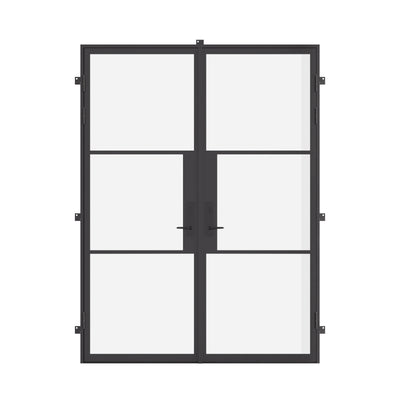
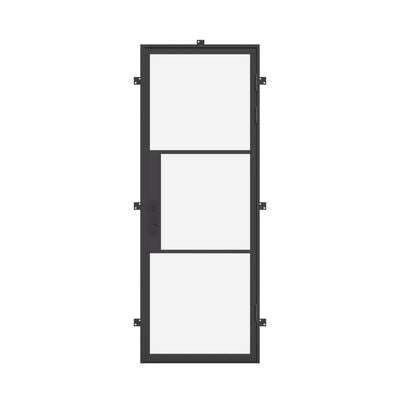
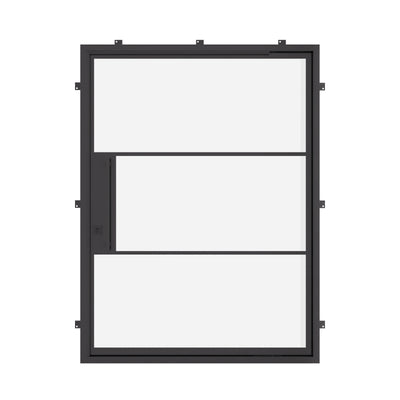
Steel Door Styles New York Homeowners Love
Air 4 and Air 5 Single and Double Doors — Full glass panels with slim steel frames deliver the light-filled contemporary aesthetic transforming New York's residential architecture. The Air 4 Double Flat is the entry redefining renovated Brooklyn brownstones in Park Slope, Cobble Hill, and Fort Greene — where owners are replacing Victorian-era wood doors with steel and glass that flood narrow hallways with natural light. The Air 4 Single Flat fits Westchester colonials, Hudson Valley farmhouses, and Hamptons modern barns. The Air 5 Single Flat maximizes glass for narrow townhouse entries where every lumen of natural light matters.
Pivot Doors — The statement entry for New York's ultra-luxury market. The Air 4 Pivot and Knox Pivot rotate on floor-mounted pivots to create the dramatic first impressions that Upper East Side townhouses, Tribeca loft conversions, and Hamptons oceanfront estates demand. In a market where Manhattan townhouses sell for $15 to $30 million and Hamptons compounds exceed $50 million, the entry must match the price point. Steel pivot doors deliver that drama while handling New York's freeze-thaw punishment without the warping and binding that plagues wood pivot doors by their second winter.
Iron Doors — Wrought iron detailing is native to New York's brownstone and townhouse tradition. The ornamental iron stoops, railings, and garden gates of Brooklyn Heights and the West Village are architectural signatures. The Air 4 Single Full Arch and Air 4 Double Full Arch honor this ironwork heritage while delivering the thermal performance and structural integrity that modern codes require — bridging the gap between historic character and contemporary performance.
French Doors — Whether opening onto a brownstone garden in Brooklyn, a terrace overlooking the Hudson, or a screened porch in the Hamptons, steel French doors deliver the elegant proportions and expansive glass that New York's premium residential market demands. The thermal performance meets NYC's strict energy codes while the steel frames handle the lateral wind loads that nor'easters deliver — loads that rack wood French doors out of square within a few winters.
Bi-Fold and Sliding Doors — The Air 4 Bi-Fold creates the indoor-outdoor transitions that are transforming Hamptons architecture — where wide-open walls facing the ocean are now the defining luxury feature. Also increasingly popular in brownstone garden-level renovations where bi-folds open cramped interiors onto private gardens, and in Hudson Valley homes where walls of glass capture seasonal views. Steel frames maintain weathertight seals through New York's winters while resisting the coastal wind loads that destroy aluminum alternatives.
New York's Architectural Landscape: Region by Region
Brooklyn: Brownstone Renaissance
Brooklyn's brownstone neighborhoods — Park Slope, Brooklyn Heights, Cobble Hill, Fort Greene, Carroll Gardens, Prospect Heights — represent one of the largest concentrations of 19th-century row houses in America. Originally built between 1840 and 1900, these limestone-and-brownstone facades with ornamental iron stoops are undergoing a renovation boom where $3 to $7 million gut renovations pair preserved exteriors with contemporary interiors. The front door is the single most visible element of a brownstone facade — the point where historic character meets modern owner. Iron and steel doors in period-appropriate proportions with contemporary glass deliver both, and their thermal performance meets energy codes that the original wood doors never approached.
Manhattan: Townhouse Luxury
Manhattan's townhouse market — concentrated on the Upper East Side, Upper West Side, West Village, and Greenwich Village — is among the most exclusive real estate on Earth. Townhouses on the Upper East Side routinely sell for $10 to $30 million, and recent sales in Greenwich Village have exceeded $50 million. At these price points, the entry door must project permanence, sophistication, and quality. Pivot doors and Air 4 double entries in matte black create the dramatic contrast against limestone facades that the market demands. In Tribeca, converted warehouse lofts with street-level entries call for industrial-modern steel doors that honor the building's manufacturing heritage.
The Hamptons: Shingle Style Meets Contemporary Glass
The Hamptons' architectural identity has split into two camps — the traditional cedar-shingle estates inspired by Stanford White's Gilded Age designs in Southampton and East Hampton, and the contemporary glass-and-steel beach houses redefining the oceanfront from Montauk to Sagaponack. In traditional shingle-style homes, iron doors with arched detailing complement the craftsmanship and material honesty the style demands. In contemporary builds — where Sagaponack's Billionaire Lane features homes designed by the world's top architects — Air 4 double doors and pivot entries in matte black create the minimalist drama the market expects. Both styles demand corrosion resistance that only marine-grade steel finishes provide.
The Hudson Valley: Stone Farmhouse to Contemporary Estate
From Cold Spring to Rhinebeck to Hudson, the Hudson Valley has become New York City's premium exurban market — where 18th-century stone farmhouses sell for $2 to $5 million and contemporary estate compounds are built on hilltops overlooking the river. The region's architectural range includes Dutch Colonial stone houses, Federal-era brick mansions, Victorian Painted Ladies in Hudson, and the rustic-contemporary new builds that are defining the valley's next chapter. Steel doors serve every era — iron with arched tops for the historic stone houses, Air 4 and pivot doors for the contemporary estates, and everything between for the renovated farmhouses that dominate the market.
Westchester and the Gold Coast: Suburban Elegance
Scarsdale, Bronxville, Rye, and Larchmont represent New York's most prestigious suburban addresses, with median home prices ranging from $1.5 to $3 million and the highest tier exceeding $10 million. Tudor Revival is Scarsdale's signature style, while Bronxville favors Colonial Revival and Mediterranean. Long Island's North Shore — the original Gold Coast of Great Gatsby fame — preserves grand estates in Kings Point, Old Westbury, and Locust Valley. In these markets, the front door communicates the home's caliber before a buyer steps inside. Steel and iron doors in period-appropriate styles deliver both the aesthetic authority and the energy performance these homes require.
Choosing the Right Color for New York Homes
Brownstone and Townhouse: Matte black is the definitive brownstone door color — it reads as classic, intentional, and premium against both brown and gray stone facades. Dark bronze works for warmer-toned brownstone. The door should complement the ironwork of the stoop railing, not compete with it. In historic districts, landmarks commission guidelines often specify appropriate door colors.
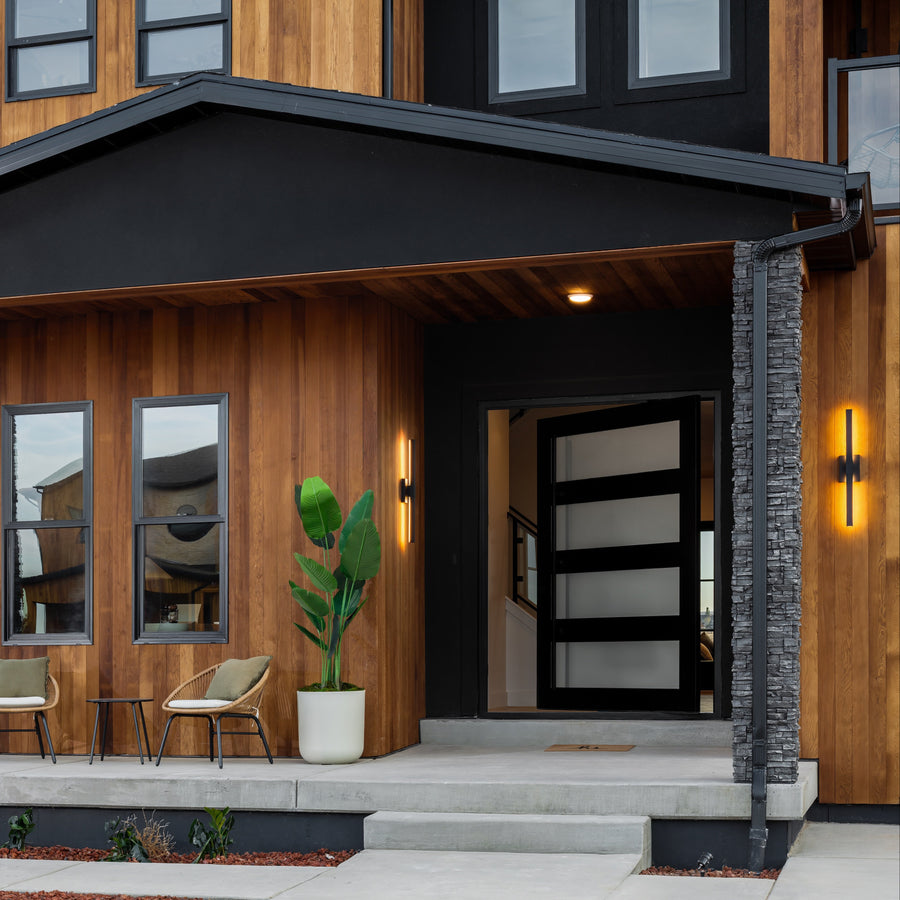
Modern and Contemporary: Matte black dominates New York's luxury contemporary market from Tribeca to the Hamptons. Gunmetal and dark charcoal create architectural contrast against lighter materials. A black steel door against white or cream stucco — or against the silver-gray of weathered cedar shingle — delivers the bold statement trending in New York's premium residential market.
Hamptons Coastal: Soft grays, weathered tones, and muted blues complement the cedar-shingle tradition without fighting ocean views. White works better here than in sunnier climates — the Hamptons' softer light makes white read as classic rather than harsh. Marine-grade powder coatings in these lighter shades resist the salt air that destroys standard finishes within a few Atlantic seasons.
Tudor and Colonial Revival: Dark bronze, forest green, and deep burgundy honor the English and Colonial traditions that define Westchester and the North Shore. These rich, saturated tones complement brick, stone, and half-timbering while reading as historically appropriate in neighborhoods where architectural review matters.
Hudson Valley Rustic: Dark bronze and iron oxide finishes complement the stone, reclaimed wood, and natural materials that define the Valley's farmhouse and estate architecture. Warm earth tones blend with the landscape — particularly important in a region where the view, not the door, should be the first thing visitors notice.
PINKYS uses an automotive-grade paint system that can match virtually any color specification. In New York's harsh four-season environment — where salt, freeze-thaw, UV, and humidity all attack the finish — coating durability matters as much as the color itself. Our finishes resist the peeling, chalking, and corrosion that destroy lesser coatings within a few New York winters.
Why New York Homeowners Choose Steel
In a state where the median home price exceeds $430,000 statewide — and where Manhattan townhouses trade for $5 to $30 million, Brooklyn brownstones for $2 to $7 million, and Hamptons estates for $3 to $50 million-plus — a steel door investment of $5,000 to $15,000 represents a fraction of property value with outsized impact on curb appeal, energy performance, and perceived quality. Steel entry doors return 188 to 216 percent ROI according to industry data, and in New York's competitive luxury market where buyers evaluate every detail, the front door is the first and most visible quality signal.
Beyond resale, steel doors eliminate the maintenance cycle that New York's climate inflicts on wood — no refinishing every 2-3 years as freeze-thaw and moisture destroy the finish, no swelling and sticking through humid summers, no progressive deterioration from over 100 freeze-thaw cycles per year. A steel door installed today will outlast the next three wood doors, performing through nor'easters, heat waves, and hurricane seasons without complaint. In a market where first impressions determine property value, steel is the material that maintains its statement through decades of New York weather.
Transform Your New York Home
Whether you're renovating a Brooklyn brownstone, restoring a Manhattan townhouse, building contemporary in the Hamptons, upgrading a Hudson Valley farmhouse, or refreshing a Westchester colonial, PINKYS has steel and iron doors engineered specifically for what New York demands.
We ship nationwide with fast, reliable delivery — and our doors are built to handle everything New York's four brutal seasons throw at them.
Contact Our Team or call 844-843-6677


