

New Jersey packs every East Coast weather extreme into the nation's most densely populated state — and your front door absorbs it all. Nor'easters bury the Jersey Shore under feet of sand and salt spray while pushing storm surges into coastal communities. Summer heat and humidity make wood doors swell shut. Hurricane Sandy in 2012 destroyed entire neighborhoods from Long Beach Island to the Bayshore. And the 100-plus freeze-thaw cycles per year progressively work apart every joint and seal not engineered for the Garden State's relentless seasonal assault.
Steel and iron doors aren't just a style choice for New Jersey homes — they're the practical answer to a state where wood warps in the humidity, cracks through freeze-thaw cycling, and deteriorates from salt air exposure across the entire Shore. Add New Jersey's strict energy codes, post-Sandy flood zone requirements, and a luxury market where Alpine and Deal properties trade for $5 to $30 million, and steel is the material that delivers both the performance and the prestige New Jersey's premium markets demand.
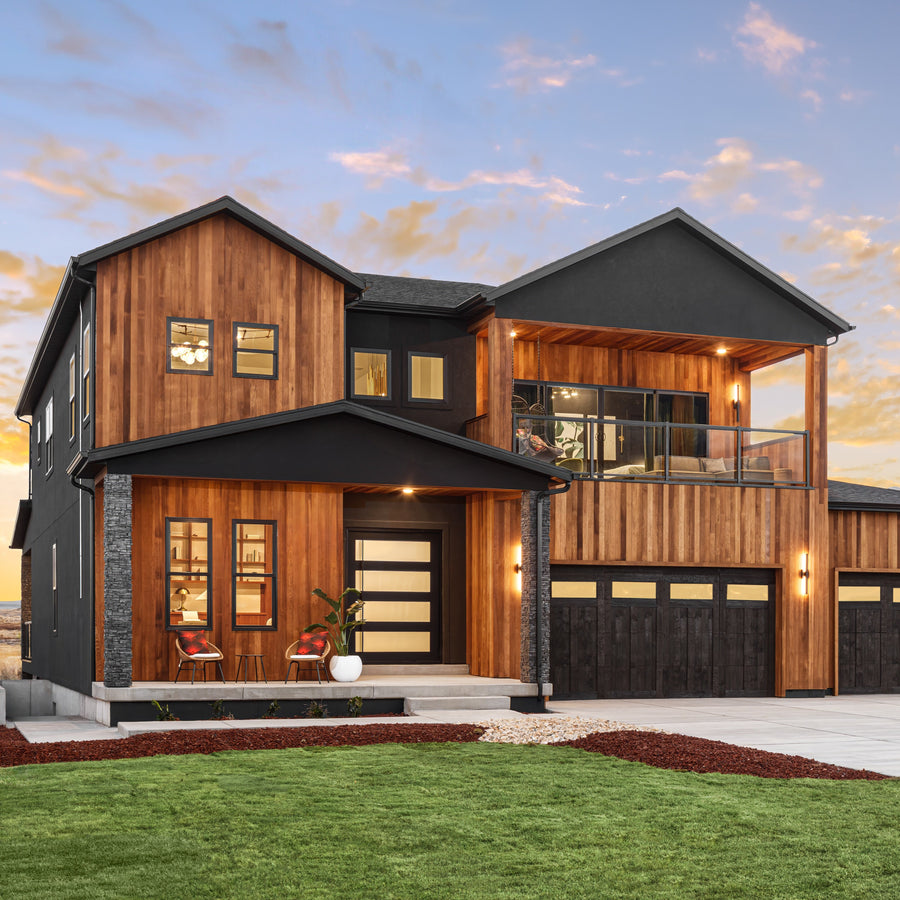
What New Jersey's Climate Demands From Your Doors
The Jersey Shore: Hurricanes, Salt Air, and Coastal Exposure
Hurricane Sandy's 2012 storm surge of 8 to 13 feet devastated the Jersey Shore from Sandy Hook to Cape May, destroying thousands of homes and redefining coastal risk for an entire generation. The rebuilding codes that followed are among the strictest on the East Coast. Between storms, salt air penetrates well inland from the 130-mile coastline, humidity exceeds 80 percent in summer, and nor'easters drive wind and salt spray across every coastal property multiple times per year. Steel doors with impact-rated glazing, marine-grade hardware, and powder-coated finishes resist this environment where wood doors swell, rot, and corrode from salt air exposure within a few Jersey Shore seasons.
North Jersey: Suburban Extremes
Bergen County, Essex County, and the northern suburbs experience the full four-season assault — summer temperatures in the upper 90s with high humidity, winter lows well below zero, over 100 freeze-thaw cycles per year, and occasional ice storms that coat every surface. The temperature range from minus 10 winter mornings to 100-degree summer afternoons creates thermal stress that warps wood frames and cracks rigid seals within a few seasons. Steel doors with thermal breaks handle this full range while maintaining the elegant appearance that Short Hills, Alpine, and Saddle River demand.
The Pine Barrens and South Jersey: Humidity and Heat
South Jersey's proximity to the Atlantic and Delaware Bay creates sustained humidity and summer heat that drives moisture into every organic building material. The Pine Barrens' acidic soil and high water table accelerate wood decay, and termite pressure throughout south Jersey adds biological degradation to the climate-driven assault. Steel doors eliminate both moisture absorption and termite risk while providing the energy performance that reduces the air conditioning costs dominating south Jersey utility bills.
New Jersey Building Codes: Why Steel Has the Advantage
Uniform Construction Code
New Jersey's Uniform Construction Code adopts the International Building Code with strict energy provisions. Glazed doors must achieve U-factors of 0.30 or lower in climate zone 4A (covering the entire state), with stringent air infiltration limits. Steel doors with thermal breaks and low-E glazing meet these requirements while reducing heating costs that drive winter utility bills above $300 in older homes.
Post-Sandy Coastal Construction
The Flood Hazard Area Control Act and post-Sandy building code amendments require coastal construction to meet elevated design flood requirements, including doors that resist hydrostatic loads, wave action, and windborne debris impact. Steel doors with impact-rated glazing and welded frames meet these structural requirements. Coastal New Jersey falls within an IBC windborne debris region, where PINKYS impact-rated steel doors and windows—tested to ASTM E1886/E1996, the same standard these jurisdictions reference—carry the documentation permit review requires.
Tap any door to explore sizes, configurations, and pricing
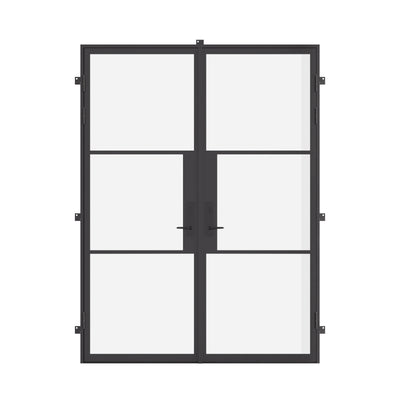
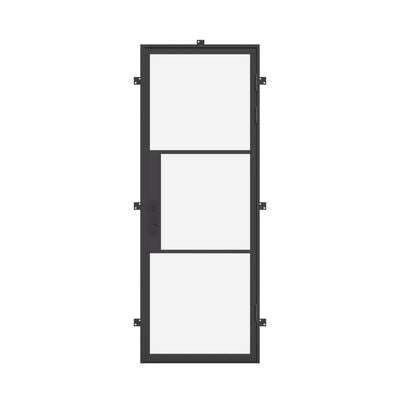
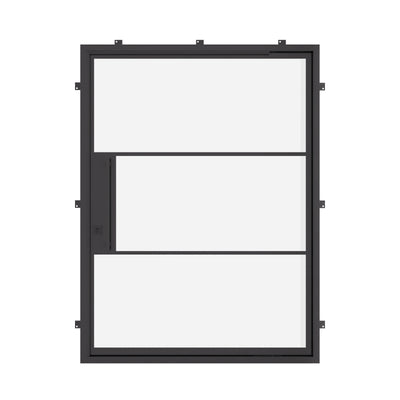
Steel Door Styles New Jersey Homeowners Love
Air 4 and Air 5 Single and Double Doors — The Air 4 Double Flat defines luxury entries in Alpine, Short Hills, and Rumson — where price points from $2 to $15 million demand entries that project quality. The Air 4 Single Flat serves the renovated colonials of Summit and Montclair and the Shore contemporary homes being rebuilt post-Sandy. The Air 5 Single Flat maximizes glass for entries in narrow Victorian row houses in Hoboken and Jersey City.
Pivot Doors — The Air 4 Pivot and Knox Pivot create the dramatic entries Alpine, Saddle River, and Deal demand — communities where homes sell for $5 to $30 million and the entry must match the statement.
Iron Doors — The Air 4 Single Full Arch and Air 4 Double Full Arch complement the Tudor, Colonial Revival, and Mediterranean estates of Englewood Cliffs, Tenafly, and Spring Lake — iron detailing honors the existing architectural character while providing the weather resistance and energy performance modern codes require.
French Doors — Steel French doors connect New Jersey homes to pool areas, terraces, and the covered porches that the state's warm-season lifestyle revolves around. Coastal installations meet post-Sandy impact requirements while inland homes benefit from the thermal performance and freeze-thaw resistance.
Bi-Fold and Sliding Doors — The Air 4 Bi-Fold opens living spaces onto the outdoor rooms that are transforming Shore architecture — where post-Sandy rebuilds feature elevated great rooms with wide-open walls facing the ocean.
New Jersey's Architectural Landscape: Region by Region
Bergen County: Elite Suburban Luxury
Alpine — consistently ranked among America's wealthiest zip codes — features $5 to $30 million estates on multi-acre lots along the Palisades with views of the Manhattan skyline. Englewood Cliffs, Saddle River, and Franklin Lakes offer $2 to $10 million properties. The architecture ranges from French Chateau and Mediterranean to contemporary glass-and-stone — all demanding entries that project permanence and quality.
The Jersey Shore: Post-Sandy Modern
The Jersey Shore's architectural identity has been reshaped by Sandy. Elevated contemporary builds with expansive glass replace the beach bungalows that Sandy destroyed. Deal and Elberon preserve grand Victorian and Mediterranean estates. Spring Lake maintains its "Irish Riviera" character with Victorian homes overlooking a non-commercial beachfront. Long Beach Island's rebuilt oceanfront homes represent a new chapter in coastal architecture — elevated, resilient, and designed for the next storm.
The Midlands: Short Hills, Summit, and Princeton
Short Hills — one of New Jersey's most prestigious addresses — showcases Tudor Revival, Colonial, and contemporary estates from $1.5 to $8 million. Summit's walkable downtown and tree-lined streets offer $1 to $3 million homes. Princeton — home to the university — combines historic architecture with academic prestige. These communities demand the same material quality as Manhattan at a suburban scale.
Hoboken and Jersey City: Urban Renaissance
Hoboken's brownstone row houses and Jersey City's historic downtown are experiencing a renovation boom driven by New York commuters. These narrow Victorian and early 20th-century homes need doors that maximize light while handling the waterfront's enhanced moisture, wind, and salt exposure from the Hudson and Upper Bay.
Choosing the Right Color for New Jersey Homes
Traditional Suburban: Black, dark bronze, and forest green complement the Colonial, Tudor, and Georgian styles that dominate Bergen County, the Midlands, and the North Shore. These classic tones project permanence against brick, stone, and clapboard facades.
Shore Coastal: Lighter finishes, soft grays, and weathered tones complement rebuilt Shore homes without competing with ocean views. Marine-grade powder coatings resist the salt air that's constant along the entire 130-mile coastline.
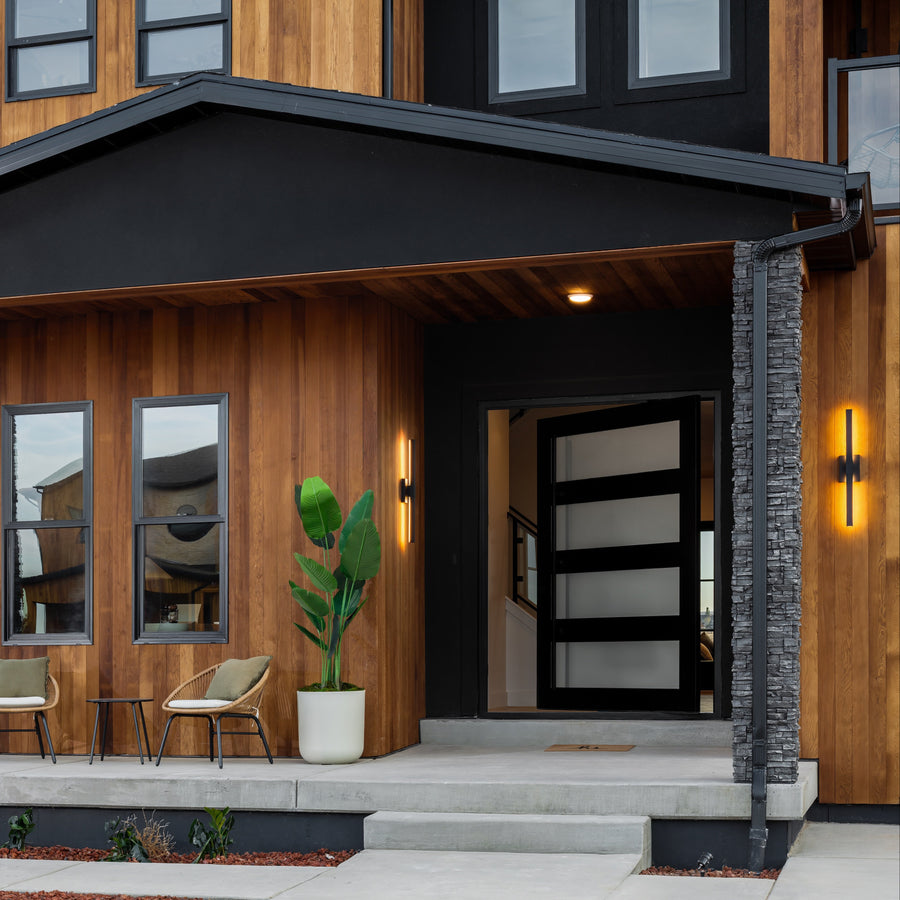
Contemporary Urban: Matte black defines the growing contemporary market in Hoboken, Jersey City, and the Shore's post-Sandy rebuilds — creating bold contrast against lighter materials.
PINKYS uses an automotive-grade paint system that can match any color. In New Jersey's four-season coastal environment, our coatings resist freeze-thaw, salt air, and UV damage across the full range of the state's conditions.
Why New Jersey Homeowners Choose Steel
In a state where the median home price exceeds $500,000 — and surpasses $5 million in Alpine, $3 million in Deal, and $2 million in Short Hills — a steel door investment of $5,000 to $15,000 delivers outsized impact. Steel entry doors return 188 to 216 percent ROI, and in New Jersey's competitive luxury markets, premium entries are expected.
Beyond resale, steel eliminates the maintenance cycle New Jersey inflicts on wood — no freeze-thaw cracking, no salt air corrosion, no humidity-driven swelling. A steel door performs through decades of Garden State weather without complaint.
Transform Your New Jersey Home
Whether you're upgrading an Alpine estate, rebuilding Shore-front post-Sandy, renovating Tudor in Short Hills, or restoring brownstone in Hoboken, PINKYS has steel and iron doors engineered for what New Jersey demands.
We ship nationwide with fast delivery — our doors handle everything from nor'easters to Jersey heat waves.
Contact Our Team or call 844-843-6677


