Nevada doesn't just get hot — it cooks. Las Vegas hit 120 degrees in July 2024 and logged over 70 days above 100 that year. Nighttime temperatures during heat waves stay above 90, meaning your door's exterior surface never fully cools for weeks. Then the dust storms roll in — walls of brown that blast every exposed surface with abrasive desert particles at 50 mph. Drive two hours north to Reno and suddenly you're dealing with mountain snow, wildfire smoke, and freeze-thaw cycling. Your front door has to handle both Nevadas.
Steel and iron doors aren't just a style statement for Nevada homes — they're the engineering answer to a state where wood cracks and splits in single-digit humidity, fiberglass warps under sustained 115-degree surface temperatures, and UV radiation at desert elevation degrades every finish not built to resist it. Add the luxury market's explosive growth — Las Vegas and Reno combined saw record home prices in 2024 — and the growing wildfire codes around Lake Tahoe, and steel isn't optional anymore. It's what the desert and the mountains both demand.
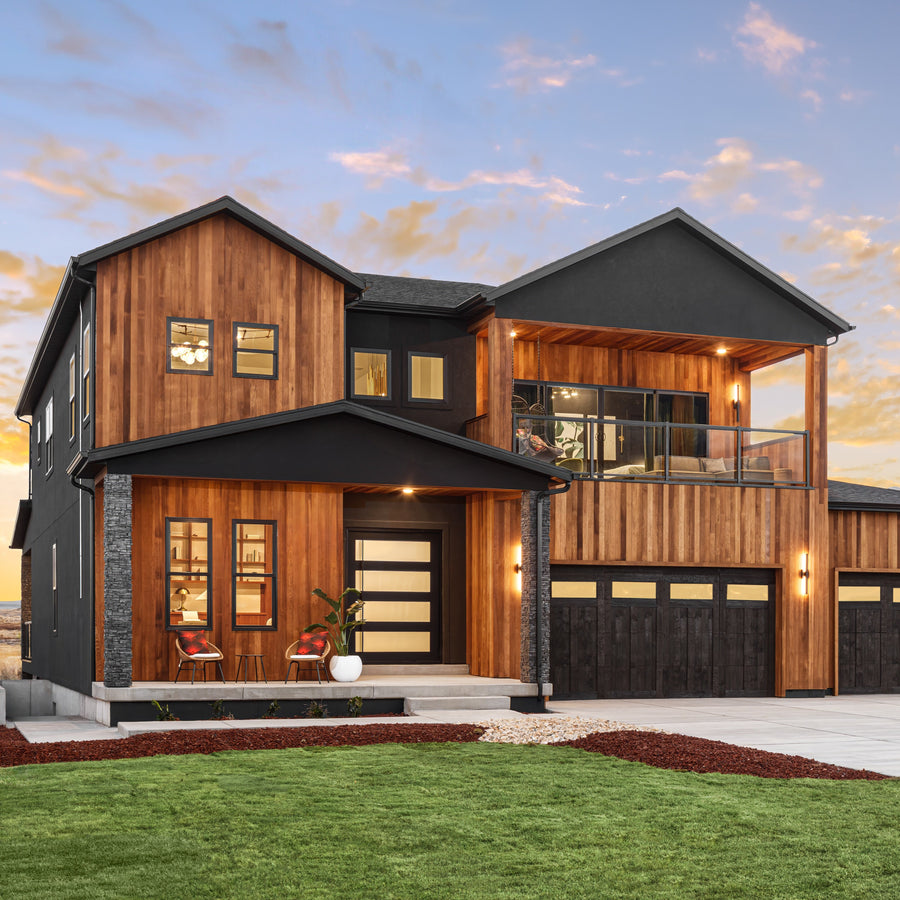
What Nevada's Climate Demands From Your Doors
Las Vegas Valley: Extreme Heat, UV, and Dust
Las Vegas recorded 120 degrees in 2024. The city averages over 70 days per year above 100 degrees and 300-plus days of sunshine. Summer surface temperatures on south-facing doors can exceed 160 degrees — hot enough to blister paint and deform lesser materials. Humidity drops below 10 percent for extended periods, pulling moisture from wood until it cracks, splits, and checks. UV intensity at Las Vegas's 2,000-foot elevation is approximately 12 percent higher than sea level, and the relentless sunshine means year-round finish degradation. Dust storms sweep through the Valley multiple times per year, sandblasting exposed surfaces with fine alkaline particles. Steel doors with automotive-grade coatings, polyurethane weatherstripping, and welded frames handle this combination without the warping, cracking, and finish failure that wood and fiberglass suffer within a few desert seasons.
Henderson and Summerlin: Luxury Desert Living
Henderson and Summerlin — Las Vegas's premier master-planned communities — share the Valley's extreme heat but add the demands of a luxury residential market where home prices routinely exceed $1 to $5 million in communities like MacDonald Highlands, The Ridges, and Spanish Trail. At these price points, the front door must project quality in an environment that actively destroys anything not engineered for the desert. The thermal cycling between air-conditioned 72-degree interiors and 115-degree exteriors stresses every seal and joint, and the pressure differential during dust storms pulls sand through any gap in a poorly sealed door assembly. Steel with compression weatherstripping and thermal breaks maintains positive seals under these conditions while projecting the permanence luxury buyers expect.
Reno-Tahoe: Mountain Snow, Wildfire, and Altitude
Reno sits at 4,500 feet with the Sierra Nevada rising immediately to the west. The climate is radically different from Las Vegas — cold winters with temperatures well below zero, significant snowfall, and daily temperature swings of 40-plus degrees. Lake Tahoe's Nevada side, including the ultra-luxury community of Incline Village, experiences 200-plus inches of snow per year at lake level and far more on surrounding peaks. UV at Tahoe's 6,200-foot elevation is approximately 20 percent more intense than sea level. Add the growing wildfire threat — the Caldor Fire in 2021 threatened South Lake Tahoe, forcing the first evacuation in the city's history — and Reno-Tahoe demands doors that handle mountain extremes, fire codes, and luxury aesthetics simultaneously. Steel doors with thermal breaks, insulating glass, and noncombustible construction deliver on all three.
Rural Nevada: The Ultimate Extremes
Outside the metropolitan areas, Nevada's climate reaches true extremes. The state's record high of 125 degrees was recorded in Laughlin. Winter lows in northern Nevada drop below minus 30. The daily temperature range in the high desert regularly exceeds 50 degrees. Dust is constant, wind is persistent, and humidity is almost nonexistent for months at a time. In these conditions, only materials engineered for punishment survive. Steel doesn't just survive — it maintains its function and appearance through conditions that would destroy wood, fiberglass, and standard aluminum within a season or two.
Nevada Building Codes: Why Steel Has the Advantage
Energy Codes
Clark County (Las Vegas) has adopted the 2018 IECC, with Henderson and other municipalities moving toward newer standards. In Nevada's climate zone 3B (hot-dry), glazed doors must achieve U-factors of 0.35 or lower with solar heat gain coefficients of 0.25 or lower to reduce the cooling loads that drive Las Vegas electricity bills above $300 per month in summer. In the Reno-Tahoe area (climate zone 5B), requirements tighten significantly for winter heating performance — U-factors of 0.30 or lower. Standard aluminum doors fail both requirements. Steel doors with thermal breaks and low-E glazing meet all Nevada climate zone requirements while significantly reducing the energy costs that are among the highest in the West.
Tahoe-Truckee WUI Fire Codes
The Tahoe Regional Planning Agency and surrounding Nevada communities have adopted strict Wildland-Urban Interface building codes requiring noncombustible or ignition-resistant exterior materials. After the Caldor Fire evacuation in 2021 and the increasing frequency of Sierra wildfire seasons, these codes are expanding and enforcement is intensifying. Exterior doors in WUI zones must be noncombustible with rated fire resistance. In Incline Village — where homes routinely sell for $3 to $15 million — fire-rated steel doors aren't just code-compliant; they're expected by a market that understands wildfire risk is not theoretical in the Sierra.
Wind and Dust Resistance
Nevada building codes require exterior assemblies to resist wind loads of 90 to 115 mph depending on location — critical in a state where desert wind events regularly exceed these speeds. Equally important is dust infiltration resistance — Nevada's fine alkaline dust degrades internal mechanisms, coats glass, and works into weatherstripping, compromising the seal over time. Welded steel frames with compression weatherstripping maintain positive seals under wind pressure while resisting the dust infiltration that plagues lesser door systems.
Tap any door to explore sizes, configurations, and pricing
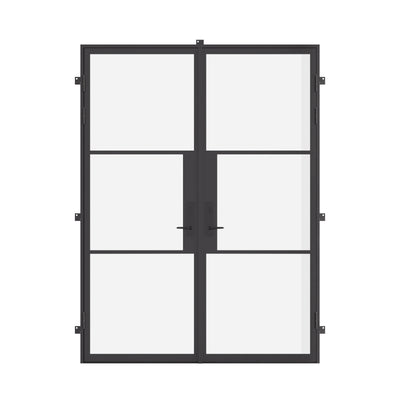
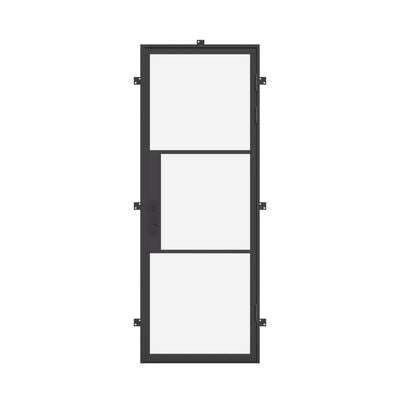
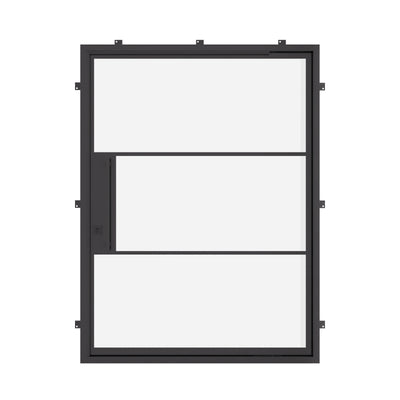
Steel Door Styles Nevada Homeowners Love
Air 4 and Air 5 Single and Double Doors — Full glass panels with slim steel frames define Nevada's luxury desert aesthetic. The Air 4 Double Flat is the entry dominating new construction in The Ridges, MacDonald Highlands, and Summit Club — where the first impression must match $2 to $10 million price points. The Air 4 Single Flat fits the contemporary homes of Summerlin and Southern Highlands. The Air 5 Single Flat maximizes glass for entries designed to frame mountain and Strip views. The welded steel frame handles desert thermal cycling and dust storm impacts without dimensional change.
Pivot Doors — The defining entry for Las Vegas luxury. The Air 4 Pivot and Knox Pivot create the 8 to 10-foot entries that MacDonald Highlands and The Ridges demand — properties designed for dramatic arrivals. In a market fueled by entertainment wealth, tech transplants from California, and international buyers, the pivot door creates the statement that sets the tone for everything behind it. Steel pivot doors maintain their operation through extreme heat without the warping that destroys wood pivots in the desert within a season.
Iron Doors — Las Vegas's Spanish and Mediterranean residential tradition makes wrought iron doors a natural fit. The Air 4 Single Full Arch and Air 4 Double Full Arch complement the stucco, tile, and arched motifs that define Spanish Trail, Lake Las Vegas, and the Mediterranean-style homes throughout the Valley. For Reno-Tahoe mountain homes, iron doors deliver the fire resistance WUI codes require while providing the rustic-luxury aesthetic that complements timber and stone.
French Doors — Nevada's outdoor living season runs year-round in the south and 8 months in the north, and French doors in steel frame the pool areas, covered patios, and mountain views that define luxury living in both markets. Steel French doors provide the thermal performance Nevada's energy codes demand while handling the UV and heat that destroy wood French doors within a few desert seasons.
Bi-Fold and Sliding Doors — The Air 4 Bi-Fold erases the wall between great room and outdoor living — the defining feature of Nevada luxury architecture. In Las Vegas, where covered patios and resort-style backyards are the norm, steel bi-folds create seamless transitions to outdoor entertainment spaces. In Tahoe, they open mountain lodges to alpine decks and views. Steel frames maintain operation through temperature extremes and resist the dust infiltration that jams aluminum bi-fold tracks.
Nevada's Architectural Landscape: City by City
Las Vegas: Desert Contemporary Capital
Las Vegas's luxury residential market has exploded beyond the Strip. The Ridges in Summerlin — where homes sell for $3 to $15 million — defines desert contemporary architecture: clean lines, natural stone, floor-to-ceiling glass, and flat roofs designed to honor the desert landscape. MacDonald Highlands in Henderson offers panoramic Strip and mountain views from $2 to $10 million estates. Summit Club, the city's most exclusive community, combines Tom Fazio golf with $5 to $20 million contemporary homes. Spanish Trail and Lake Las Vegas offer Mediterranean luxury at a more accessible tier. Throughout the market, the front door sets the tone — and steel and glass entries are increasingly the standard at every price point above $1 million.
Reno and the Truckee Meadows: Mountain Meets Modern
Reno's transformation from casino town to tech hub — fueled by Tesla's Gigafactory and Apple's data center — has reshaped its housing market. The Montreaux community at the base of Mt. Rose offers $1 to $5 million homes with ski resort access. ArrowCreek's gated neighborhoods combine golf course living with mountain views. Downtown Reno's revitalized Midtown district blends Victorian preservation with modern loft conversions. The old Southwest Reno neighborhoods of Caughlin Ranch and Juniper Hills showcase transitional and contemporary mountain architecture. Steel doors serve the full range — from historic renovation to contemporary mountain builds.
Incline Village and Lake Tahoe: Alpine Luxury
Incline Village — Nevada's Lake Tahoe community — is one of the most expensive real estate markets in the state, with median prices exceeding $1.5 million and lakefront properties trading for $10 to $30 million. The architecture blends mountain lodge tradition with contemporary alpine design — massive timber framing, native granite, and walls of glass positioned to capture lake views. Crystal Bay and Glenbrook add to Tahoe's Nevada-side luxury footprint. Every home in these communities needs doors that handle 200-plus inches of snow, extreme cold, altitude UV, and increasingly strict fire codes. Steel with thermal breaks and fire-rated construction is the engineered answer.
Choosing the Right Color for Nevada Homes
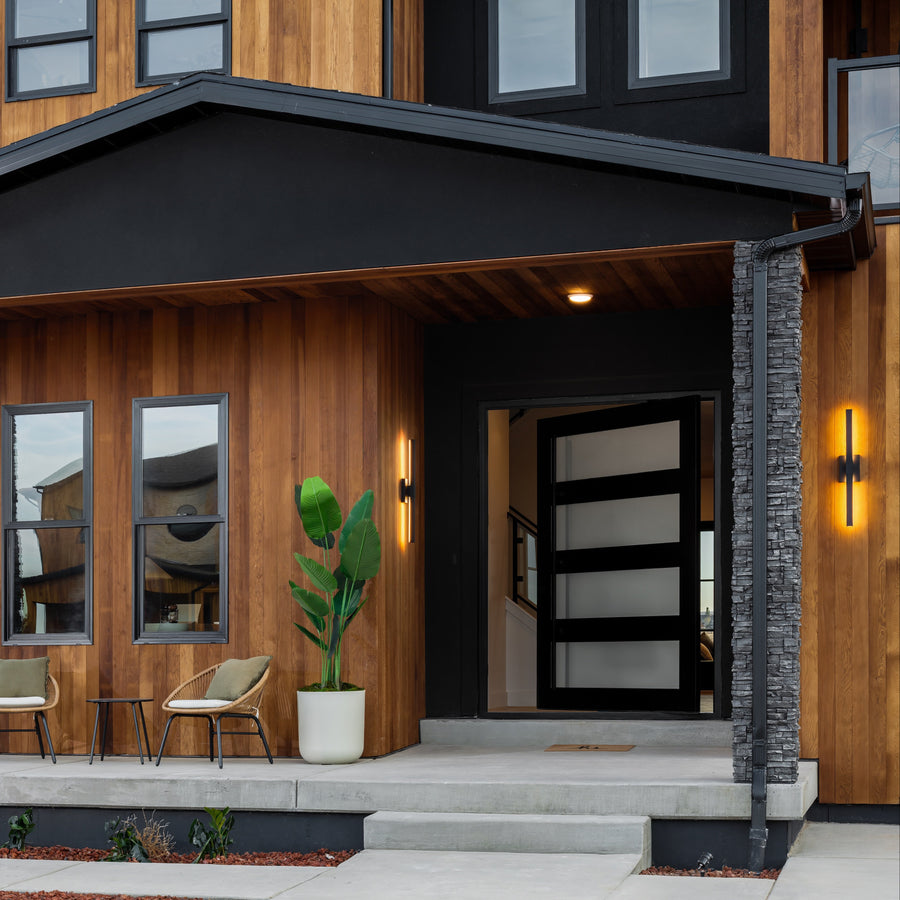
Desert Contemporary: Matte black dominates Nevada's luxury contemporary market — creating bold contrast against desert stone, stucco, and concrete. A black steel pivot door against warm-toned stucco or rammed earth delivers the architectural statement that defines The Ridges, MacDonald Highlands, and Summit Club. Gunmetal and dark charcoal offer alternatives for cooler-toned contemporary palettes.
Spanish and Mediterranean: Wrought iron black and dark bronze complement the stucco, barrel tile, and arched motifs of Las Vegas's Mediterranean tradition — particularly in Spanish Trail, Lake Las Vegas, and the established neighborhoods where this style dominates. Rich warm tones echo the existing metalwork that's signature to the style.
Mountain Lodge and Alpine: Dark bronze and weathered iron finishes complement the timber, granite, and natural materials that define Tahoe and Reno mountain architecture. Deep warm tones blend with pine, cedar, and the bark-to-rust palette of Sierra forests. In Incline Village and Crystal Bay, the door should honor the landscape — not compete with lake views.
Desert Earth Tones: Warm bronze, iron oxide, and sandstone finishes blend with Nevada's natural palette for homeowners who prefer their door to complement rather than contrast the desert landscape. These finishes work particularly well with adobe-inspired and Southwestern architecture in the Valley and throughout rural Nevada.
PINKYS uses an automotive-grade paint system that can match virtually any color specification. In Nevada's extreme UV and heat environment — where south-facing door surfaces exceed 160 degrees — finish technology is everything. Our coatings resist the fading, chalking, and thermal breakdown that destroy lesser finishes within a few Nevada seasons.
Why Nevada Homeowners Choose Steel
In a state where the Las Vegas median home price exceeds $425,000 — and routinely surpasses $3 million in The Ridges, $5 million at Summit Club, and $10 million on Tahoe's lakefront — a steel door investment of $5,000 to $15,000 represents a fraction of property value with outsized impact on curb appeal and perceived quality. Steel entry doors return 188 to 216 percent ROI according to industry data, and in Nevada's luxury market where California transplants and international buyers drive expectations, premium steel entries are the baseline, not the exception.
Beyond resale, steel doors eliminate the maintenance cycle Nevada's climate inflicts on wood — no annual refinishing as UV and heat destroy the finish, no cracking from desert dryness, no warping from thermal cycling, no dust infiltration through degraded seals. A steel door installed today will outlast the next three wood doors, performing through heat waves, dust storms, and mountain winters without complaint. In a state with two radically different climates, steel is the one material engineered for both.
Transform Your Nevada Home
Whether you're building desert contemporary in Las Vegas, upgrading luxury in MacDonald Highlands, fire-proofing at Lake Tahoe, or modernizing in Reno's mountain neighborhoods, PINKYS has steel and iron doors engineered specifically for what Nevada demands.
We ship nationwide with fast, reliable delivery — and our doors are built to handle everything Nevada throws at them, from 120-degree desert heat to 200 inches of Sierra snow.
Contact Our Team or call 844-843-6677