

Arizona doesn't just get hot — it redefines what hot means. Phoenix hit 119 degrees in 2023. The city logged 31 consecutive days above 110 in the summer of 2023 — a record that killed over 600 people in Maricopa County alone. Then monsoon season arrives with haboobs that turn the sky brown and blast every exposed surface with desert sand at 60 mph. Your front door has to survive both extremes, and everything in between.
Steel and iron doors aren't just a design statement for Arizona homes — they're the material answer to a state where wood cracks and splits in single-digit humidity, fiberglass warps under sustained 115-degree heat, and UV radiation at 1,000 to 3,000 feet of elevation degrades every finish not engineered to resist it. Add monsoon wind loads, growing wildfire codes in the high country, and a luxury market where Paradise Valley homes routinely sell for $5 to $30 million, and steel isn't a luxury — it's what the desert demands.
What Arizona's Climate Demands From Your Doors
The Valley of the Sun: Extreme Heat and UV
Phoenix recorded 119 degrees in July 2023. Temperatures stayed above 110 for 31 consecutive days. The city averages over 100 days per year above 100 degrees, with nighttime temperatures during heat waves remaining above 90 — meaning your door's exterior surface never fully cools for weeks at a stretch. Humidity drops below 10 percent for extended periods, creating conditions where wood doors crack, split, and check as moisture is pulled from the grain. UV intensity at Phoenix's 1,100-foot elevation is approximately 10 percent higher than sea level, and the 299 sunny days per year mean relentless finish degradation. Steel doors with automotive-grade coatings and polyurethane foam weatherstripping are engineered for exactly this punishment — no warping, no cracking, no UV failure.
Monsoon Season: Haboobs, Wind, and Flash Flooding
From mid-June through September, Arizona's monsoon season brings haboobs — massive dust walls that sweep across the Valley at 40 to 60 mph, sandblasting every exposed surface. Behind the dust come thunderstorms with microbursts exceeding 100 mph, hail, and flash flooding that turns dry washes into rivers within minutes. The transition from bone-dry heat to monsoon humidity stresses door seals through rapid expansion and contraction. Steel frames with welded joints maintain integrity through these violent transitions where wood frames rack and fiberglass cracks under sudden pressure differentials. Powder-coated steel finishes resist the abrasive sandblasting that strips paint off lesser materials in a single haboob event.
The High Country: Mountain Snow and Wildfire
Flagstaff averages over 100 inches of snow per year at 7,000 feet. Prescott, Sedona, and Payson experience winter temperatures well below freezing with daily swings of 40 to 50 degrees. The temperature differential between a heated 72-degree interior and a minus-10-degree exterior stresses every seal and joint in a door assembly. At elevation, UV intensity increases roughly 10 percent per 3,000 feet — Flagstaff receives about 25 percent more UV than Phoenix, which already receives more than most of the country. Add growing wildfire risk — the 2002 Rodeo-Chediski Fire burned 468,000 acres in eastern Arizona — and mountain communities need doors that handle extreme cold, snow loads, UV, and fire codes simultaneously. Steel doors with thermal break technology and insulating glass deliver on all counts.
Tucson and the Sonoran Desert: A Different Kind of Heat
Tucson's climate is slightly more moderate than Phoenix — sitting at 2,400 feet with slightly lower peak temperatures and marginally higher humidity from monsoon moisture. But summer still hits 110-plus, winter mornings drop into the 20s, and the daily temperature swing of 30 degrees is constant. The Sonoran Desert's fine alkaline dust infiltrates weatherstripping and coats every surface. Tucson also sits in a seismic zone — not as active as California, but the 1887 Sonoran earthquake was magnitude 7.2, and modern seismic hazard maps show real risk. Steel doors resist the thermal cycling, dust infiltration, and seismic stresses that combine to punish doors in the Tucson basin.
Arizona Building Codes: Why Steel Has the Advantage
Energy Codes
Arizona municipalities have adopted various versions of the IECC — Phoenix follows the 2018 IECC, while Scottsdale and other Valley cities are moving toward 2021 standards. In climate zone 2B (hot-dry), glazed doors must achieve U-factors of 0.40 or lower with solar heat gain coefficients of 0.25 or lower to reduce cooling loads in a state where air conditioning runs 7 to 9 months per year. In the high country's zone 4 and 5 areas, requirements tighten further for winter heating efficiency. Standard aluminum doors fail these requirements — aluminum conducts heat too readily for Arizona's extremes. Steel doors with thermal breaks and low-E glazing packages meet all Arizona climate zone requirements while reducing the energy costs that make Arizona utility bills some of the highest in the Southwest.
Wildfire Codes in the High Country
After the Rodeo-Chediski Fire (2002), the Yarnell Hill Fire (2013, which killed 19 hotshot firefighters), and expanding WUI development around Prescott, Flagstaff, Sedona, and Payson, Arizona communities have adopted increasingly strict Wildland-Urban Interface building codes. Exterior doors in WUI zones must be noncombustible or ignition-resistant, with rated fire resistance that exceeds what wood or fiberglass can provide. As development pushes further into Arizona's forested mountain communities, these codes expand annually. Steel is inherently noncombustible and achieves fire ratings that make it the default choice for high-country construction where wildfire risk is not theoretical — it's annual.
Wind and Dust Resistance
Arizona's building codes in monsoon-prone areas require exterior assemblies to resist wind pressures consistent with 90 to 115 mph design wind speeds, depending on location. Door assemblies must maintain weathertight seals under these conditions while resisting the infiltration of fine desert dust that compromises lesser systems. Welded steel frames with compression weatherstripping maintain positive seals under wind loads and pressure differentials that pull wood frames out of square and allow dust infiltration around fiberglass doors.
Tap any door to explore sizes, configurations, and pricing
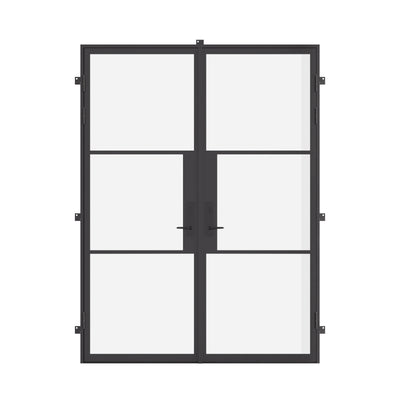
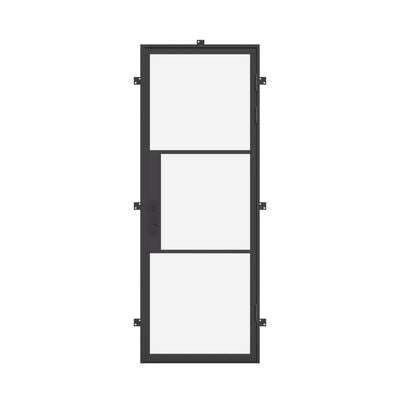
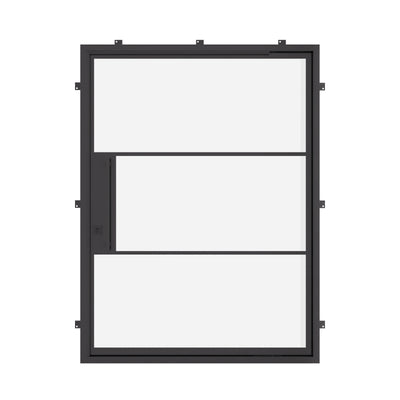
Steel Door Styles Arizona Homeowners Love
Air 4 and Air 5 Single and Double Doors — Full glass panels with slim steel frames define Arizona's desert contemporary aesthetic. The Air 4 Double Flat is the entry you see on new builds in Paradise Valley, Silverleaf, and Scottsdale's DC Ranch — homes designed to frame mountain and desert views from the moment you walk in. The Air 4 Single Flat fits the Haver-inspired mid-century renovations in Phoenix's Arcadia and Biltmore neighborhoods. The Air 5 Single Flat offers even wider glass for maximum light in recessed desert entries. The minimal steel profile maximizes views while the welded frame handles thermal cycling from 25 degrees to 119 degrees without dimensional change.
Pivot Doors — The defining entry for Arizona luxury. The Air 4 Pivot and Knox Pivot rotate on floor-mounted pivots to create the 8 to 10-foot entries that Paradise Valley and Silverleaf estates demand — properties where $10 to $30 million price tags require an entry experience that matches. Steel pivot doors span the oversized openings that are standard in Arizona luxury architecture without the warping and sagging that destroys wood pivot doors in the desert within a few seasons.
Iron Doors — Wrought iron is architecturally native to Arizona's Spanish Colonial, Territorial, and Southwestern hacienda traditions. The Air 4 Single Full Arch and Air 4 Double Full Arch honor the arched doorways of Tucson's historic Barrio Viejo, the Spanish Colonial estates of the Catalina Foothills, and the hacienda-style homes that define Scottsdale's original architectural character. Iron doors provide the fire resistance mountain communities need while delivering the authentic Southwest aesthetic that buyers in these markets expect.
French Doors — Arizona's outdoor living season runs 8 to 10 months, and French doors in steel deliver the expansive glass that frames mountain views and pool areas. Whether you're opening onto a covered patio in a Scottsdale Mediterranean or a ramada overlooking the Catalina Mountains in Tucson, steel French doors provide the thermal performance Arizona codes demand without sacrificing the view-capturing openness Arizona architecture is designed around.
Bi-Fold and Sliding Doors — The Air 4 Bi-Fold stacks its steel panels to erase the wall between great room and outdoor living — the feature every Arizona luxury home is built around. Popular in Paradise Valley estates where the indoor-outdoor transition is seamless, contemporary homes in Scottsdale where desert patios extend the floor plan, and mountain retreats in Sedona where red rock views demand an unobstructed frame. The steel frames maintain their operation through Arizona's thermal extremes where aluminum bi-folds bind, stick, and eventually fail.
Arizona's Architectural Landscape: City by City
Scottsdale and Paradise Valley: Desert Luxury Capital
Paradise Valley — Arizona's wealthiest municipality, where the median home price exceeds $3 million — is defined by sprawling desert contemporary estates set against Camelback Mountain and Mummy Mountain. Silverleaf, DC Ranch, and Estancia are gated communities where $5 to $30 million homes feature walls of glass, natural stone, and steel — materials that honor the desert landscape rather than fighting it. Scottsdale's Old Town preserves a more traditional Southwestern aesthetic, while North Scottsdale's master-planned communities showcase transitional architecture blending desert materials with contemporary clean lines. Pivot doors and Air 4 entries dominate the luxury tier.
Phoenix: Mid-Century Revival and Urban Contemporary
Phoenix is experiencing a mid-century modern renaissance. The Arcadia neighborhood — wedged between Camelback Mountain and the Arizona Canal — has become the Valley's hottest address for renovated Haver and Beadle-inspired homes and new contemporary builds on teardown lots, with prices now exceeding $2 million. The Biltmore area preserves Arizona's most prestigious address around the historic Arizona Biltmore, while the Willo and Encanto-Palmcroft historic districts showcase Spanish Colonial Revival, Pueblo Revival, and Craftsman architecture. Downtown Phoenix's Roosevelt Row and Grand Avenue arts districts are attracting modern infill where steel and glass are the default materials.
Tucson: Sonoran Heritage
Tucson's architecture is rooted in the desert. The Barrio Viejo historic district preserves Sonoran row houses with thick adobe walls and wrought iron detailing — some dating to the 1870s. The Catalina Foothills showcase luxury contemporary and Spanish Colonial homes set against the Santa Catalina Mountains, while Sam Hughes and El Encanto offer walkable neighborhoods with Craftsman bungalows and Territorial-style homes. The University of Arizona area blends historic preservation with modern urban development. Iron doors with arched tops are historically authentic in Tucson's oldest neighborhoods, while Air 4 and pivot doors serve the contemporary hillside market where desert views demand maximum glass.
Sedona: Red Rock Contemporary
Sedona's planning standards require buildings to blend with the red rock landscape — earth tones, natural materials, low profiles. The result is a unique architectural style that merges rustic Southwestern elements with contemporary clean lines and expansive glass positioned to frame iconic views of Cathedral Rock, Bell Rock, and the Mogollon Rim. Homes here routinely sell for $1 to $5 million, and the combination of dramatic views, wildfire risk, and high-altitude UV creates demand for doors that are simultaneously beautiful, fire-rated, and UV-resistant. Steel in dark bronze and weathered iron finishes serves this market perfectly.
Flagstaff and the Mountain Communities
At 7,000 feet, Flagstaff experiences a mountain climate — 100-plus inches of snow, winter lows well below zero, and summer highs in the pleasant 80s. The Continental Country Club and Forest Highlands communities showcase mountain lodge and alpine contemporary architecture where massive timber framing meets walls of glass overlooking ponderosa pine forests. Prescott's Hassayampa neighborhood and Payson's Rim Country communities offer similar mountain living. In these communities, doors must handle heavy snow loads, extreme freeze-thaw cycling, high-altitude UV, and increasingly strict WUI fire codes. Steel doors with thermal break technology and insulating glass are the engineered solution for Arizona's high country.
Choosing the Right Color for Arizona Homes
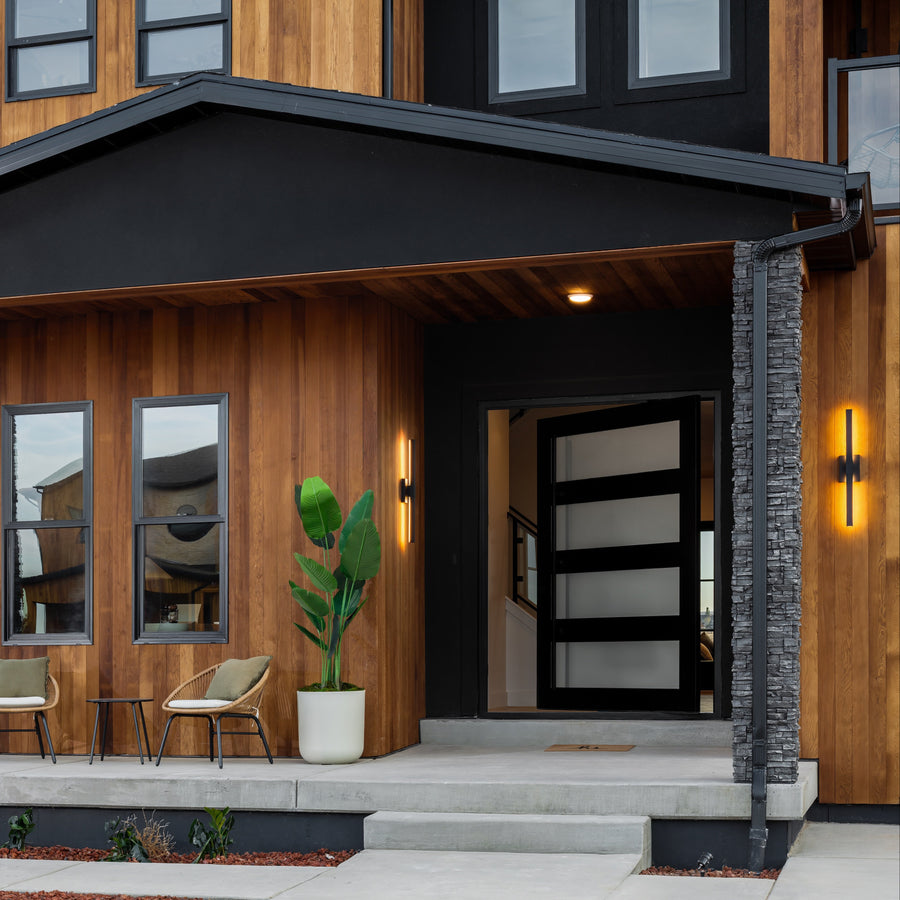
Desert Contemporary: Matte black dominates Arizona's luxury contemporary market. Against the warm tones of desert stone, rammed earth, and stucco, a black steel door creates the bold architectural statement that defines Paradise Valley, North Scottsdale, and Arcadia's most sought-after homes. Gunmetal and dark charcoal offer subtler alternatives that still read as intentional and premium.
Spanish Colonial and Hacienda: Wrought iron black and dark bronze finishes complement the stucco, clay tile, and arched motifs that define Arizona's traditional Southwestern architecture. In Tucson's historic barrios and Scottsdale's older estates, iron doors in these finishes echo the existing metalwork that's original to the style.
Sonoran and Territorial: Warm earth tones — burnt sienna, desert bronze, iron oxide — blend with the natural palette of the Sonoran Desert. These finishes complement adobe walls, exposed timber, and the ochre-to-rust color range of Arizona's native stone and soil. In Sedona, where planning standards require earth-tone exteriors, these finishes meet code while enhancing architectural character.
Mountain Lodge and Rustic Contemporary: Dark bronze and weathered iron finishes complement the timber, stone, and natural materials that define mountain architecture in Flagstaff, Prescott, and Payson. Deep warm tones blend with ponderosa bark, moss rock, and the forest palette rather than competing with the landscape.
Mid-Century Modern: Clean matte black or dark bronze frames maintain the walls-of-glass aesthetic original to Arizona's mid-century tradition — the Haver homes, the Beadle experiments, the Soleri legacy. Minimalist hardware, slim profiles. The door should feel like a continuation of the original architect's glass-and-steel vision.
PINKYS uses an automotive-grade paint system that can match virtually any color specification. In Arizona's extreme UV and heat environment — where surface temperatures on south-facing doors can exceed 160 degrees — finish technology matters as much as the color itself. Our coatings resist the fading, chalking, and thermal breakdown that destroy lesser finishes within a few seasons of Arizona sun.
Why Arizona Homeowners Choose Steel
In a state where the median home price exceeds $420,000 in the Phoenix metro — and routinely surpasses $3 million in Paradise Valley, $1 million in Sedona, and $5 million in Silverleaf — a steel door investment of $5,000 to $15,000 represents a fraction of property value with outsized impact on curb appeal and perceived quality. Steel entry doors return 188 to 216 percent ROI according to industry data, and in Arizona's luxury market where California transplants and international buyers expect premium entries, steel and iron doors are increasingly the minimum expectation, not the exception.
Beyond resale, steel doors eliminate the maintenance cycle that Arizona's climate inflicts on wood — no annual refinishing as UV and heat destroy the finish, no cracking and splitting from single-digit humidity, no warping from 90-degree daily temperature swings, no haboob damage. A steel door installed today will outlast the next three wood doors, performing through heat waves, monsoons, dust storms, and mountain winters without complaint. In a state that punishes building materials harder than almost anywhere else, steel is the material that was built for it.
Transform Your Arizona Home
Whether you're building desert contemporary in Paradise Valley, restoring mid-century modern in Phoenix's Arcadia, honoring Sonoran heritage in Tucson, framing red rock views in Sedona, or mountain-proofing in Flagstaff, PINKYS has steel and iron doors engineered specifically for what Arizona demands.
We ship nationwide with fast, reliable delivery — and our doors are built to handle every extreme Arizona's five distinct climate zones throw at them.
Contact Our Team or call 844-843-6677


