

Colorado doesn't pick one way to punish your front door — it uses everything. Denver's hail causes more insured damage than any other state's. The Marshall Fire in 2021 destroyed over 1,000 homes in Louisville and Superior in a single day. Mountain communities measure snow in feet while UV intensity at elevation runs 25 percent higher than sea level. And chinook winds blast down the Front Range at 100 mph, swinging temperatures 50 degrees in hours. Your front door has to handle all of it — at altitude.
Steel and iron doors aren't just a design upgrade for Colorado homes — they're the material answer to a state where wood cracks in low humidity, warps through extreme thermal cycling, and burns when wildfire reaches the WUI. Add Colorado's aggressive energy codes, the nation's worst hail exposure, and a luxury market where Aspen homes average over $5 million, and steel stops looking like an option and starts looking like the only serious choice.
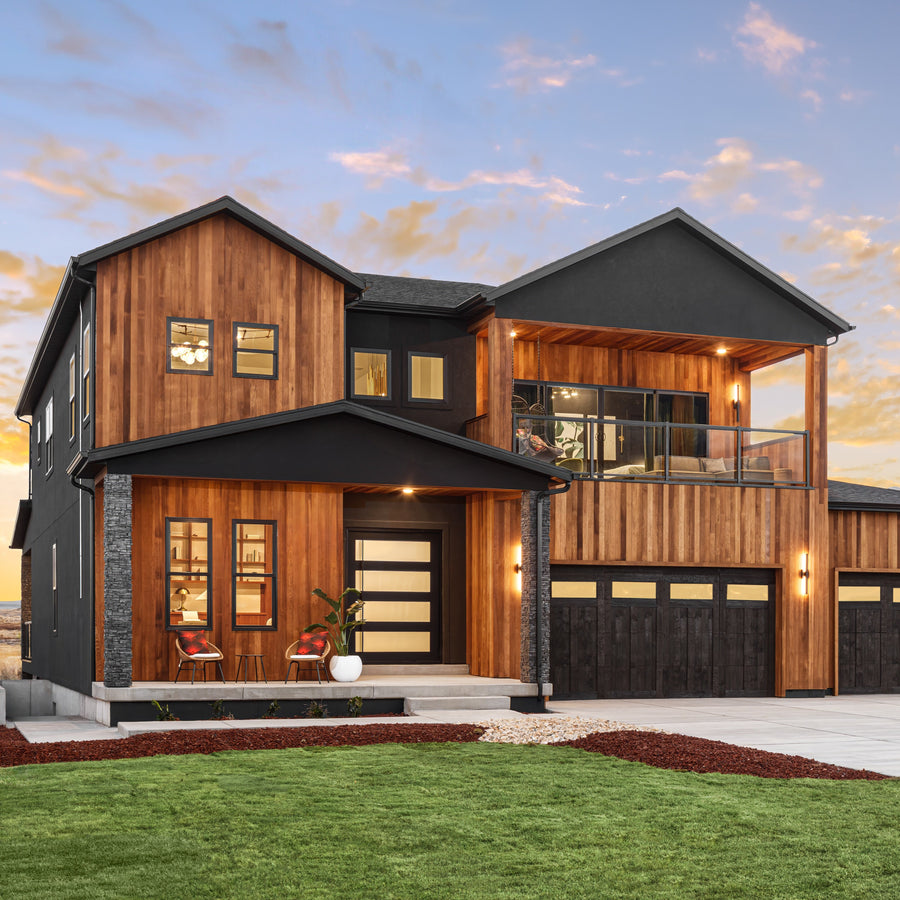
What Colorado's Climate Demands From Your Doors
The Front Range: Hail, Chinooks, and Extreme Temperature Swings
Colorado leads the nation in hail losses — the state accounts for more insured hail damage than any other, with the Denver metro regularly experiencing baseball-sized hail events that destroy roofs, siding, and unprotected doors. In July 2023, hailstorms caused over $3 billion in insured losses across the Front Range in a single season. Add chinook winds that scream down the eastern slope of the Rockies at 80 to 100 mph, swinging temperatures from 10 degrees to 60 degrees in a few hours — and then back again — and you have thermal cycling that warps wood frames within a few seasons. Denver's record high is 105 degrees; its record low is minus 29. Steel doors with welded frames and impact-resistant coatings handle both the hail impacts and the thermal extremes that destroy lesser materials.
The Mountains: Heavy Snow, Deep Cold, and Altitude UV
Vail averages over 300 inches of snow per year. Breckenridge, Telluride, and Aspen see similar accumulation. Winter temperatures at 8,000 to 10,000 feet routinely drop to minus 20 or colder, while the temperature differential between a heated 72-degree interior and a minus 25-degree exterior stresses every seal, joint, and material in a door assembly. At 10,000 feet, UV intensity is approximately 35 percent higher than sea level, accelerating finish degradation on south-facing doors that also bake in direct sun reflected off snow — a double UV exposure that's unique to mountain environments. Steel doors with thermal break technology and insulating glass prevent the interior condensation that forms on poorly insulated doors in cold climates, while automotive-grade coatings resist the altitude UV that bleaches wood finishes within a single season.
The Western Slope: High Desert Heat and Mountain Cold
Grand Junction and the Western Slope experience a climate more like Utah than the Front Range — hot, dry summers above 100 degrees, cold winters in the teens, and daily temperature swings of 40-plus degrees through much of the year. Wine country around Palisade and the resort communities of Glenwood Springs combine agricultural heritage with growing luxury development. Low humidity in the 10 to 20 percent range pulls moisture from wood, causing cracking, splitting, and checking within seasons. Steel maintains its dimensional stability in this arid environment without the constant refinishing that wood demands.
Colorado Springs and the Palmer Divide: Military Precision Meets Mountain Beauty
Colorado Springs sits at 6,000 feet with Pikes Peak towering above — combining Front Range hail exposure, mountain UV intensity, and a climate that swings from 95-degree summers to minus 10-degree winters. The Palmer Divide between Denver and the Springs creates its own microclimate of enhanced hail and severe thunderstorms. Broadmoor area homes and the luxury communities around Garden of the Gods demand doors that handle this full range while projecting the elegance these $1 to $5 million properties require. Steel delivers the performance and the aesthetic.
Colorado Building Codes: Why Steel Has the Advantage
Energy Codes
Colorado adopted the 2021 IECC statewide, with Denver and Boulder pushing toward even stricter local amendments. In climate zones 5 and 6 — covering most of the populated state — glazed doors must achieve U-factors of 0.30 or lower, among the strictest requirements in the country. In mountain communities at zone 7, requirements tighten further. Solar heat gain coefficients of 0.40 or lower are required to balance winter solar gain against summer cooling loads. Standard aluminum doors fail these requirements — aluminum conducts too much heat. Steel doors with thermal breaks and low-E glazing packages meet all Colorado climate zone requirements, reducing heating costs that represent the largest portion of utility bills in a state where winter runs from October through May at elevation.
Wildfire Codes Post-Marshall Fire
The Marshall Fire on December 30, 2021 — driven by 100 mph winds through drought-cured grass — destroyed 1,084 homes in Louisville and Superior, causing over $2 billion in damage and becoming the most destructive wildfire in Colorado history. It struck a suburban community, not a mountain town, permanently changing Colorado's approach to WUI building codes. Boulder County, Jefferson County, and communities across the Front Range have adopted or strengthened Wildland-Urban Interface codes requiring noncombustible exterior materials including entry doors. Mountain communities from Estes Park to Evergreen to the ski towns have enforced similar codes for years. Steel is inherently noncombustible and achieves fire ratings that wood and fiberglass cannot match — a requirement, not a luxury, in post-Marshall Fire Colorado.
Hail Resistance
While no Colorado code explicitly rates doors for hail resistance, the practical reality of $3 billion-plus annual hail losses has made impact resistance a de facto requirement in the Front Range market. Insurance companies increasingly offer premium discounts for impact-resistant building materials, and homeowners who've replaced hail-damaged wood and fiberglass doors multiple times are converting to steel as a permanent solution. Steel doors with automotive-grade coatings absorb hail impacts that crack fiberglass, dent aluminum, and splinter wood — eliminating the replacement cycle that Colorado's hail seasons impose on lesser materials.
Tap any door to explore sizes, configurations, and pricing
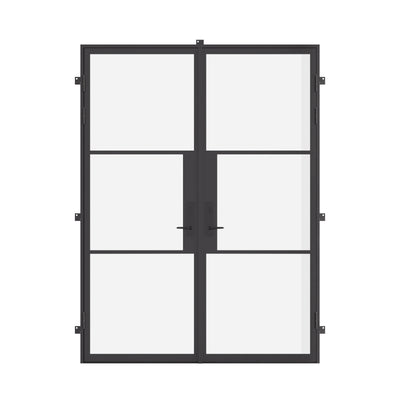
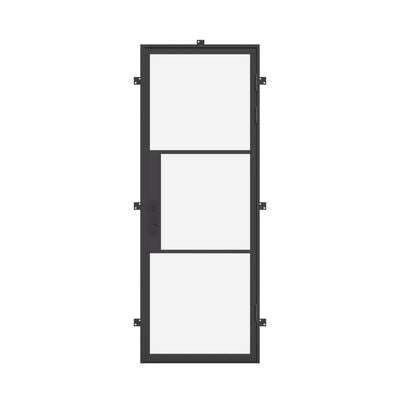
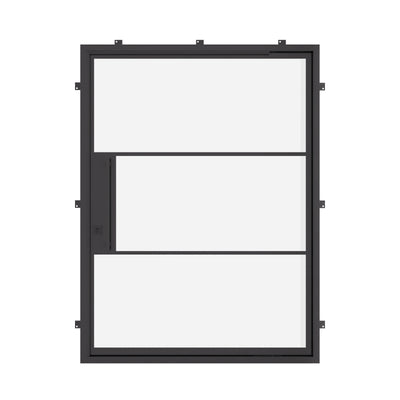
Steel Door Styles Colorado Homeowners Love
Air 4 and Air 5 Single and Double Doors — Full glass panels with slim steel frames capture Colorado's legendary mountain views from the moment you walk in. The Air 4 Double Flat is the entry defining new construction in Cherry Creek, Hilltop, and Aspen's core — where the first thing through the door should be a view. The Air 4 Single Flat fits the renovated bungalows of Washington Park and Congress Park and the modern mountain homes of Evergreen and Conifer. The Air 5 Single Flat maximizes glass in north-facing entries where natural light is precious during Colorado's short winter days. The welded steel frame handles hail, chinook winds, and thermal cycling from minus 29 to 105 degrees.
Pivot Doors — The dramatic entry for Colorado's luxury mountain and urban markets. The Air 4 Pivot and Knox Pivot rotate on floor-mounted pivots to create the grand entries that Aspen estates, Vail ski homes, and Cherry Creek's $3 to $10 million properties demand. In mountain architecture, where double-height entries frame views of the Continental Divide, pivot doors create the scale and drama that the setting deserves. Steel pivot doors maintain their operation through Colorado's extreme temperature swings without the warping and binding that destroys wood pivot doors by their second mountain winter.
Iron Doors — Wrought iron complements Colorado's mountain lodge and rustic-luxury traditions. The Air 4 Single Full Arch and Air 4 Double Full Arch pair with the massive timber framing, native stone, and hand-forged metalwork that define mountain luxury from Vail to Telluride. Iron doors deliver the WUI fire compliance mountain communities require while honoring the rugged craftsmanship aesthetic that Colorado's mountain architecture celebrates.
French Doors — Colorado's 300 days of sunshine make outdoor living a year-round possibility, and French doors in steel deliver the expansive glass that frames mountain and Front Range views. Whether opening onto a flagstone patio in the Broadmoor area or a ski-in terrace in Beaver Creek, steel French doors provide the thermal performance Colorado's strict energy codes demand without sacrificing the light and views that define Colorado living.
Bi-Fold and Sliding Doors — The Air 4 Bi-Fold stacks its steel panels to open living spaces onto Colorado's outdoor rooms — covered patios, mountain terraces, and the indoor-outdoor great rooms that define contemporary mountain architecture. Popular in Aspen's modern builds where disappearing walls frame Maroon Bells views, and increasingly specified in Denver's LoHi and RiNo neighborhoods where rooftop terraces demand weathertight, thermally efficient bi-folds. Steel frames maintain operation through Colorado's temperature extremes while resisting the hail and wind that destroy aluminum alternatives.
Colorado's Architectural Landscape: City by City
Denver: Victorian Roots, Contemporary Ambition
Denver's architectural story runs from the Victorian mansions of Capitol Hill and Curtis Park — built during the silver boom of the 1880s — through the Craftsman bungalows of Washington Park and Congress Park, to the contemporary glass-and-steel builds transforming LoHi, RiNo, and the Highlands. Cherry Creek and Hilltop represent Denver's most prestigious addresses, where $3 to $10 million homes blend traditional proportions with modern materials and finishes. The Wash Park neighborhood preserves one of Denver's best collections of Craftsman and Tudor Revival homes, while Baker and South Broadway are attracting modern infill on teardown lots. Air 4 and pivot doors dominate the contemporary market while iron doors serve the historic preservation tier.
Aspen: Mountain Luxury at Its Peak
Aspen's real estate market is among the most expensive in America — the median home price exceeds $5 million, and trophy properties on Red Mountain and in the West End routinely trade for $20 to $50 million. The architecture has evolved from rustic mining-town Victorian to a sophisticated mountain modern idiom that combines massive timber framing, local stone, floor-to-ceiling glass, and steel detailing. The Aspen core's Victorian commercial buildings are strictly preserved, while residential new construction on the hillsides pushes the boundaries of mountain contemporary design. Every element must be premium, and the front door sets that expectation. Pivot doors and Air 4 double entries in steel and glass are the standard at this tier.
Vail and Beaver Creek: Ski Resort Elegance
Vail Village's Tyrolean-inspired architecture gives way to contemporary mountain design in the surrounding neighborhoods. Beaver Creek's gated communities — including Bachelor Gulch and Arrowhead — showcase timber-frame lodges and mountain modern homes where $5 to $15 million properties are designed around ski-in/ski-out access and views of the Gore Range. The combination of heavy snow loads, extreme cold, and premium price points creates demand for doors that perform at altitude while projecting luxury. Steel doors with thermal breaks rated for mountain conditions deliver both — the performance and the statement.
Boulder: Progressive Design, Mountain Setting
Boulder's architecture reflects its culture — environmentally conscious, design-forward, and deeply connected to its mountain setting. Mapleton Hill and Chautauqua preserve historic homes with views of the Flatirons, while newer developments in North Boulder and Gunbarrel push sustainable design with contemporary aesthetics. Post-Marshall Fire, Boulder County's building codes are among Colorado's strictest for fire resistance. The city's 55-foot height limit and mountain backdrop create an intimate scale where every architectural detail matters. Steel doors serve Boulder's dual demands — contemporary design with certified fire and energy performance.
Colorado Springs: Military Heritage, Mountain Grandeur
The Broadmoor neighborhood — anchored by the historic Broadmoor Hotel — represents Colorado Springs' most prestigious address, where $2 to $8 million homes blend traditional elegance with mountain views of Pikes Peak and Cheyenne Mountain. Old Colorado City and Manitou Springs preserve Victorian and Arts and Crafts architecture at the base of Pikes Peak. The growing luxury communities in and around Garden of the Gods showcase contemporary and transitional architecture designed to complement the dramatic red rock landscape. Iron doors with arched tops suit the traditional markets while Air 4 entries define the contemporary tier.
Choosing the Right Color for Colorado Homes
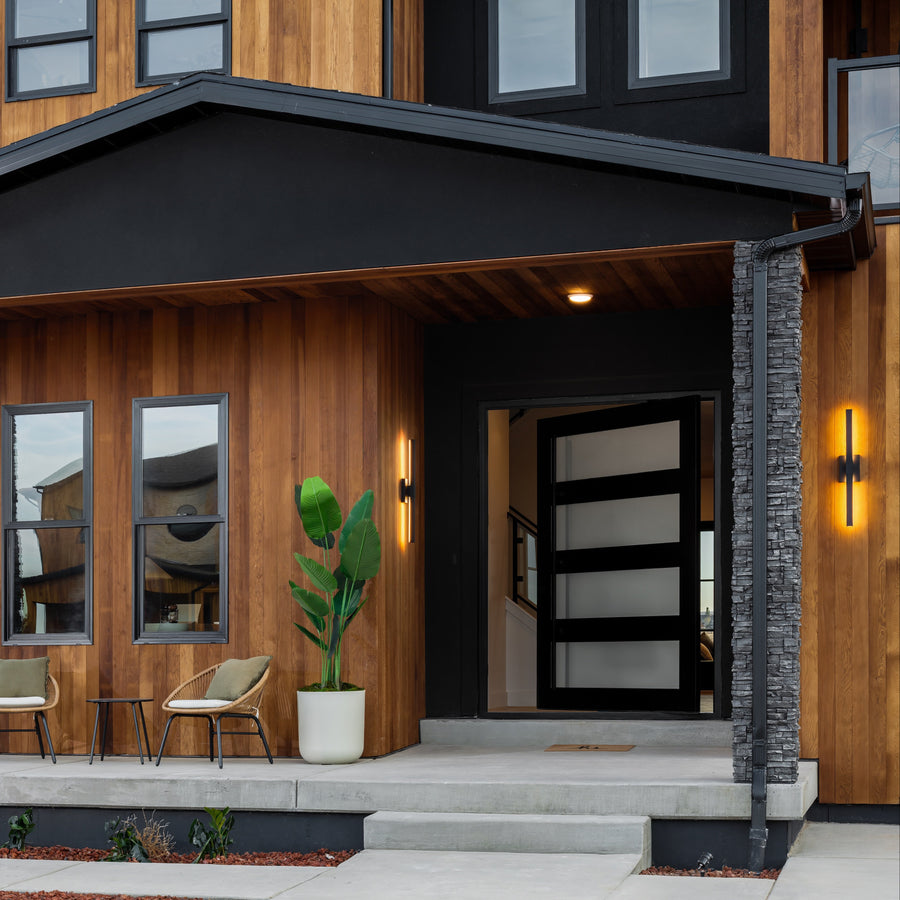
Mountain Contemporary: Matte black dominates Colorado's mountain luxury market — creating bold contrast against natural wood, stone, and stucco. A black steel door against reclaimed timber siding or native Colorado stone delivers the architectural statement that defines Aspen, Vail, and Denver's Cherry Creek. Gunmetal works for homes where the palette is cooler — gray stone, weathered steel, zinc roofing.
Mountain Lodge and Rustic Luxury: Dark bronze and weathered iron finishes complement the massive timber, hand-forged metalwork, and natural stone that define Colorado's lodge tradition. Deep warm tones blend with beetle-kill pine, moss rock, and the bark-to-rust palette of Colorado's mountain forests. The door should feel like it belongs to the landscape, not applied to it.
Victorian and Craftsman: Dark bronze, oil-rubbed finishes, and deep forest green honor the architectural traditions of Capitol Hill, Washington Park, and Old Colorado City. Earthy tones complement the brick, stone, and detailed woodwork these historic neighborhoods were built around. In designated historic districts, door color selections may require review board approval.
Contemporary Urban: Matte black and dark charcoal define Denver's LoHi, RiNo, and Highlands contemporary market — creating the bold, clean-lined entries that pair with the metal-clad and stucco facades of Denver's modern residential architecture. Minimalist hardware and slim profiles are the expectation at this tier.
Western Slope and High Desert: Warm earth tones — desert bronze, iron oxide, sandstone — complement the adobe, stucco, and natural stone of Western Slope architecture. These finishes blend with the high-desert landscape rather than competing with the mesa-and-canyon views that define the region.
PINKYS uses an automotive-grade paint system that can match virtually any color specification. In Colorado's extreme UV environment — 25 to 35 percent more intense at elevation than sea level, amplified by snow reflection — finish technology is critical. Our coatings resist the fading, chalking, and UV breakdown that destroy lesser finishes within a single Colorado mountain season.
Why Colorado Homeowners Choose Steel
In a state where the median home price exceeds $540,000 — and routinely surpasses $5 million in Aspen, $2 million in Vail, and $1.5 million in Cherry Creek — a steel door investment of $5,000 to $15,000 represents a fraction of property value with outsized impact on curb appeal, energy performance, and perceived quality. Steel entry doors return 188 to 216 percent ROI according to industry data, and in Colorado's competitive luxury market where California and Texas transplants expect premium finishes, steel and iron doors are increasingly the baseline expectation.
Beyond resale, steel doors eliminate the punishing maintenance cycle Colorado's climate inflicts on wood — no annual refinishing as altitude UV destroys the finish, no hail damage requiring door replacement, no warping from 130-degree annual temperature ranges, no fire vulnerability in WUI zones. A steel door installed today will outlast the next three wood doors, performing through hailstorms, chinook winds, blizzards, and wildfire seasons without complaint. In a state that leads the nation in hail damage and is redefining its wildfire building codes, steel is the material that delivers permanent performance.
Transform Your Colorado Home
Whether you're building mountain modern in Aspen, renovating Craftsman in Washington Park, fire-proofing in post-Marshall Fire Boulder County, upgrading luxury in Cherry Creek, or engineering for hail on the Front Range, PINKYS has steel and iron doors engineered specifically for what Colorado demands.
We ship nationwide with fast, reliable delivery — and our doors are built to handle every challenge Colorado's extreme climate and elevation throw at them.
Contact Our Team or call 844-843-6677


