

North Carolina stretches from the hurricane-battered Outer Banks to 6,000-foot peaks in the Blue Ridge — and your front door has to survive every mile in between. The coast takes direct hurricane hits with 130 mph winds and 15-foot storm surges. The Piedmont combines 100-degree summers with ice storms that shut down Charlotte and Raleigh. The mountains bury homes under feet of snow while freeze-thaw cycling works apart every joint not engineered for elevation. No other East Coast state tests building materials across this range of extremes.
Steel and iron doors aren't just a luxury upgrade for North Carolina homes — they're the practical answer to a state where wood rots in coastal humidity, warps through Piedmont temperature swings, and gets devoured by termites from Wilmington to Asheville. Add hurricane-zone impact requirements on the coast, growing energy code adoption, and a luxury market that spans from Biltmore Forest estates to Bald Head Island oceanfront to Charlotte's Myers Park mansions, and steel is the material that performs everywhere North Carolina demands it.
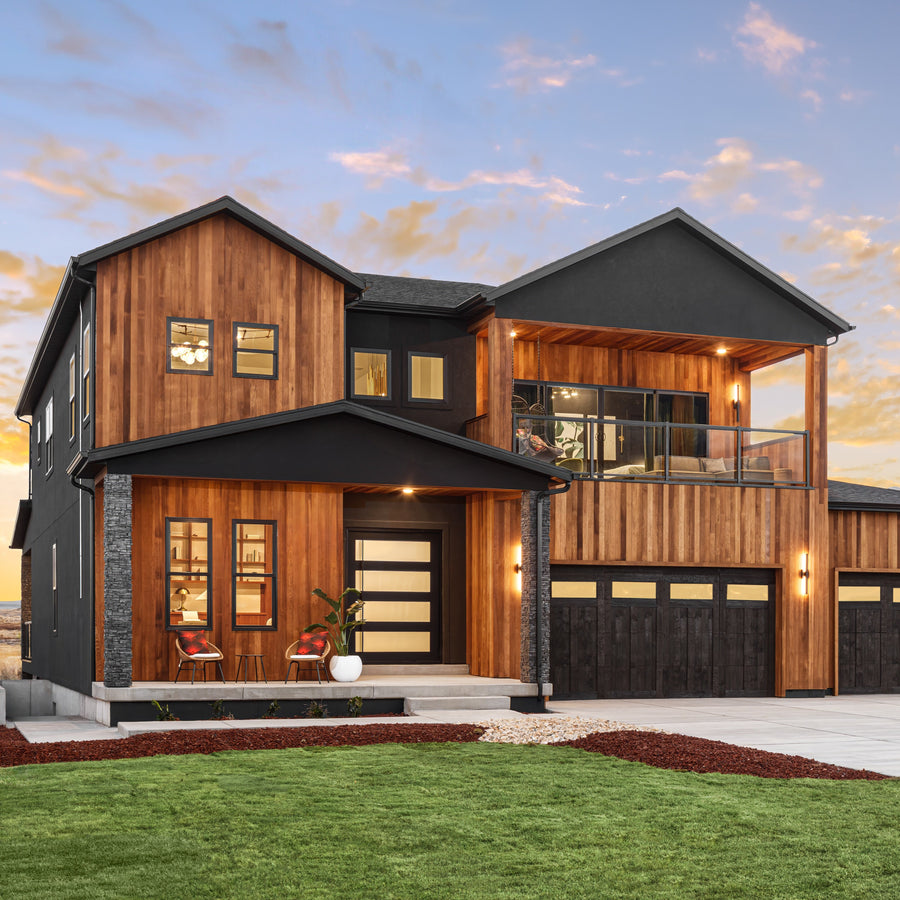
What North Carolina's Climate Demands From Your Doors
The Coast: Hurricanes, Salt Air, and Subtropical Humidity
Hurricane Florence in 2018 dropped 30-plus inches of rain on Wilmington over three days, causing catastrophic flooding across eastern North Carolina. Hurricane Dorian in 2019 devastated Ocracoke Island with a 7-foot storm surge. The Outer Banks — a 200-mile barrier island chain — absorbs Atlantic storms directly, with salt spray penetrating miles into the mainland. From Wilmington to the Outer Banks, humidity exceeds 80 percent for months, and the subtropical climate never fully dries out wood surfaces. Steel doors with impact-rated glazing, marine-grade hardware, and powder-coated finishes resist this combination where wood doors swell, rot, and fail within a few coastal seasons.
The Piedmont: Heat, Ice Storms, and Temperature Swings
Charlotte and Raleigh experience summer temperatures consistently above 95 degrees with humidity that pushes heat indices above 110. Then winter brings the ice storms that are the Piedmont's signature weather threat — December 2022's Winter Storm Elliott knocked out power to hundreds of thousands and coated every exterior surface in ice. The annual cycle from humid 100-degree summers to ice-storm winters creates thermal and moisture stress that warps wood doors, cracks rigid seals, and progressively degrades fiberglass. Steel doors with thermal break technology handle both extremes without dimensional change.
The Mountains: Snow, Cold, and Altitude UV
Mount Mitchell — the highest peak east of the Mississippi at 6,684 feet — anchors a mountain region where Asheville, Boone, and Blowing Rock experience genuine mountain weather. Winter temperatures drop well below zero, snowfall accumulates in feet, and the temperature differential between a heated interior and a subzero exterior stresses every seal and joint. At elevation, UV intensity increases approximately 10 percent per 3,000 feet, accelerating finish degradation on south-facing doors. Steel doors with insulating glass and thermal break frames prevent the interior condensation that plagues poorly insulated doors in mountain climates while resisting the altitude UV that bleaches wood finishes in a single season.
North Carolina Building Codes: Why Steel Has the Advantage
Energy Code
North Carolina adopted the 2018 NC Energy Conservation Code, which requires glazed doors to meet U-factor requirements across climate zones 3 through 5. Coastal zone 3 requires U-factors of 0.35 or lower; mountain zone 5 tightens to 0.30. Solar heat gain coefficients of 0.25 or lower apply in most jurisdictions. Steel doors with thermal breaks and low-E glazing meet all zones while reducing heating and cooling costs across the state's full climate range.
Coastal Wind and Flood Requirements
North Carolina's coastal building code requires exterior doors in hurricane-prone regions to resist design wind speeds of 130 to 150 mph. Impact-resistant construction is required in windborne debris regions along the immediate coast, and flood zone requirements mandate doors that resist hydrostatic loads in V-zones. Steel doors with impact-rated glazing and welded frames meet these structural requirements where wood doors fail under lateral wind and water pressure.
Termite Resistance
North Carolina falls in the moderate-to-heavy termite zone, with the coastal plain and Piedmont experiencing the highest pressure. While codes require soil treatment for new construction, steel doors eliminate termite risk entirely at the entry point — one of the most vulnerable exterior openings for subterranean termite access.
Tap any door to explore sizes, configurations, and pricing
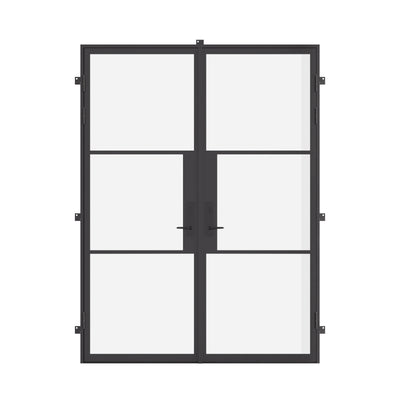
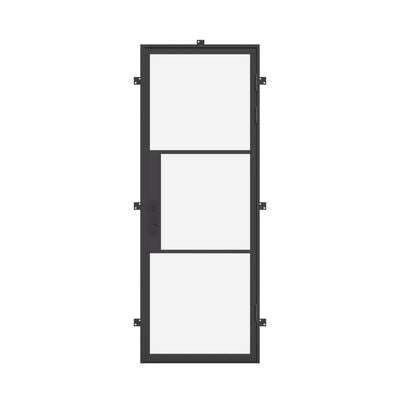
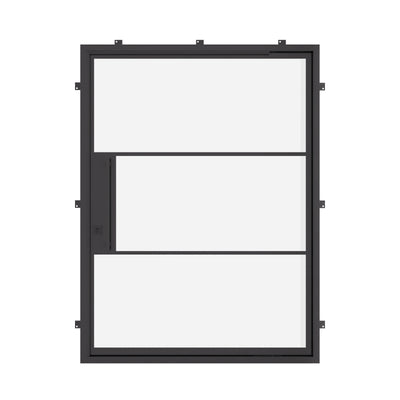
Steel Door Styles North Carolina Homeowners Love
Air 4 and Air 5 Single and Double Doors — The Air 4 Double Flat defines luxury entries in Charlotte's Myers Park and Eastover, Raleigh's Hayes Barton and Oakwood, and Asheville's Biltmore Forest. The Air 4 Single Flat fits the Craftsman homes of Asheville's Montford neighborhood and the coastal contemporary builds from Wilmington to the Outer Banks. Maximum glass captures natural light while the welded steel frame handles everything from hurricane winds to mountain freeze-thaw.
Pivot Doors — The Air 4 Pivot and Knox Pivot create dramatic entries for the luxury market — Charlotte's Quail Hollow estates, the waterfront properties of Lake Norman, and Bald Head Island's exclusive oceanfront. Steel pivot doors span oversized openings while maintaining operation through North Carolina's humidity without the swelling and binding that plagues wood pivots.
Iron Doors — The Air 4 Single Full Arch and Air 4 Double Full Arch complement the Southern architectural traditions — Colonial, Georgian, and Federal styles in historic Wilmington, Old Salem in Winston-Salem, and Raleigh's Oakwood Historic District. Iron detailing honors the existing architectural character while delivering moisture and termite resistance that wood doors cannot match.
French Doors — North Carolina's porch-centric architecture makes French doors essential — opening onto wrap-around porches in Asheville, screened porches overlooking the Blue Ridge, and oceanfront decks from Figure Eight Island to the Outer Banks. Steel French doors provide hurricane resistance on the coast and thermal performance in the mountains.
Bi-Fold and Sliding Doors — The Air 4 Bi-Fold creates wide-open transitions between indoor and outdoor living — popular in Outer Banks beach houses, Asheville mountain homes with long-range views, and Charlotte contemporary builds with covered outdoor living rooms.
North Carolina's Architectural Landscape: City by City
Charlotte: Banking Capital Luxury
Myers Park and Eastover — Charlotte's premier neighborhoods — showcase grand Colonial Revival, Tudor, and Georgian estates on tree-lined boulevards, with prices from $1.5 to $8 million. SouthPark and Ballantyne offer luxury in master-planned settings. The emerging South End and NoDa districts drive contemporary urban development. Lake Norman's waterfront communities north of the city combine lake living with luxury contemporary and traditional architecture. Charlotte's financial-industry wealth creates demand for premium entries that project success — and steel doors deliver that statement.
Asheville: Mountain Arts and Craftsman Heritage
Asheville's architectural identity ranges from Biltmore — America's largest private residence — to the Arts and Crafts bungalows of Montford and Grove Park, to the Art Deco downtown that rivals Miami Beach in density. Biltmore Forest's gated community preserves $1 to $5 million estates in a mountain setting. The arts scene has attracted contemporary architecture that blends mountain materials with modern design. West Asheville and the River Arts District are experiencing a renovation boom. Iron doors complement the Craftsman and Arts Deco heritage while contemporary steel entries serve the mountain-modern market.
Raleigh-Durham: Research Triangle Sophistication
The Research Triangle's tech and academic wealth drives a sophisticated housing market. Raleigh's Hayes Barton and Historic Oakwood preserve early 20th-century architecture. Durham's Trinity Park and Forest Hills offer walkable neighborhoods with Craftsman and Colonial homes. Chapel Hill's Governor's Club and The Preserve offer gated luxury. New construction across the Triangle increasingly specifies steel and glass entries that reflect the region's innovation-driven identity.
Wilmington and the Coast
Wilmington's historic downtown preserves one of North Carolina's finest collections of antebellum and Victorian architecture. Wrightsville Beach, Figure Eight Island, and Bald Head Island — accessible only by ferry — offer exclusive coastal living where hurricane-rated doors aren't optional. The Outer Banks' iconic beach houses, from Corolla to Hatteras, need doors engineered for direct Atlantic exposure.
Choosing the Right Color for North Carolina Homes
Traditional Southern: Black and dark bronze complement white columns, brick, and the formal proportions of Colonial, Georgian, and Federal architecture across the Piedmont and coast. These classic tones honor the existing ironwork traditions of North Carolina's historic districts.
Mountain Rustic and Craftsman: Dark bronze, oil-rubbed finishes, and forest green complement the stone, timber, and natural materials of Blue Ridge architecture. Earthy tones blend with the mountain landscape and honor the Arts and Crafts tradition.
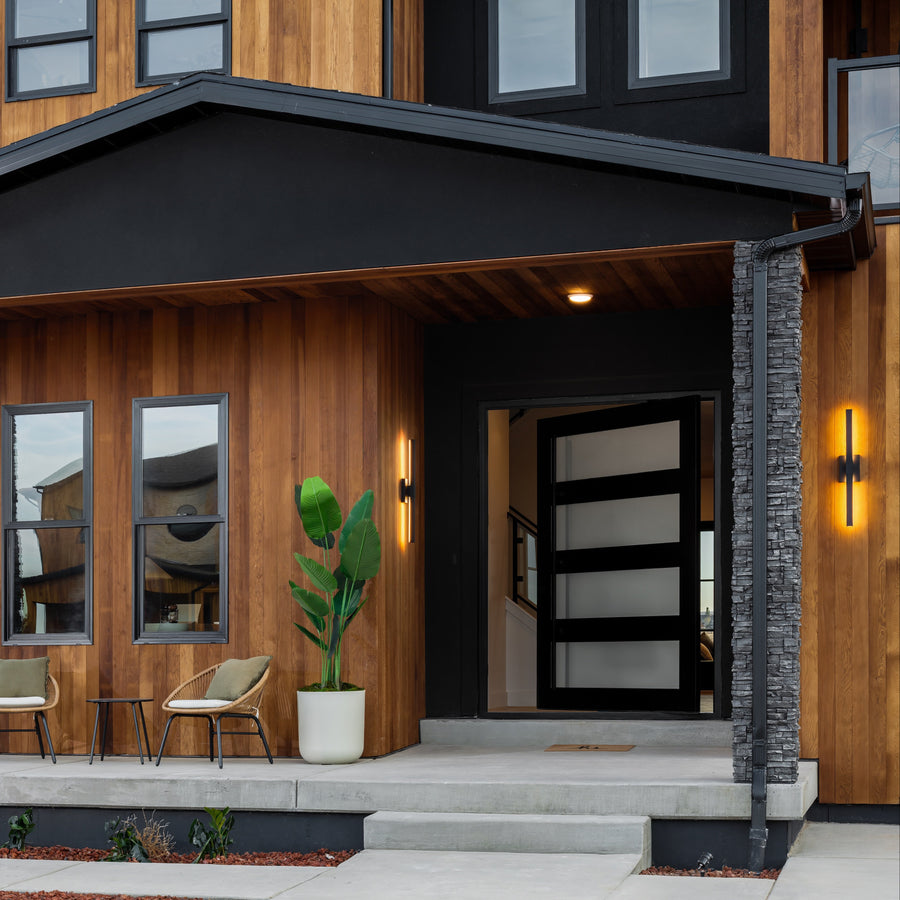
Contemporary: Matte black dominates North Carolina's growing contemporary market — creating bold contrast against lighter facades in Charlotte's new builds and the Triangle's modern developments.
Coastal: Lighter finishes, soft grays, and weathered tones complement beach homes without competing with ocean views. Marine-grade powder coatings resist the salt air that's relentless along the Outer Banks and southern coast.
PINKYS uses an automotive-grade paint system that can match virtually any color. In North Carolina's varied climate — from coastal salt air to mountain UV — our coatings resist fading, corrosion, and moisture-driven failure across every environment the state delivers.
Why North Carolina Homeowners Choose Steel
In a state where the median home price exceeds $350,000 — and routinely surpasses $2 million in Myers Park, $3 million in Biltmore Forest, and $5 million-plus on Figure Eight Island — a steel door investment of $5,000 to $15,000 delivers outsized impact on curb appeal and property value. Steel entry doors return 188 to 216 percent ROI, and in North Carolina's growing luxury markets, premium entries are increasingly expected.
Beyond resale, steel eliminates the maintenance cycle North Carolina inflicts on wood — no humidity-driven swelling, no ice storm damage, no termite risk, no hurricane vulnerability. A steel door installed today performs through decades of North Carolina weather without complaint.
Transform Your North Carolina Home
Whether you're building luxury in Charlotte's Myers Park, restoring Craftsman in Asheville, upgrading coastal on the Outer Banks, or modernizing in the Research Triangle, PINKYS has steel and iron doors engineered for what North Carolina demands.
We ship nationwide with fast, reliable delivery — and our doors handle everything from Atlantic hurricanes to Blue Ridge blizzards.
Contact Our Team or call 844-843-6677


